










For most busy homes, the best fabric for a sofa is a tightly woven one with a short, dense surface, such as a plush velvet or a good chenille. These cope with everyday wear, hide the odd mark and are quick to brush or vacuum. The right choice for you, though, depends on who uses the sofa and how.
Here is how the common upholstery fabrics compare, and how to test them before you buy.

Sofa fabrics compared
| Fabric | What it is like | Best for | Think twice if |
|---|---|---|---|
| Plush velvet | Short, dense pile with a soft sheen | Families, pets, everyday use | You dislike fabric that shades with the light |
| Chenille | Soft, slightly raised surface | Living rooms that get daily use | Pets shed a lot, as the texture holds hair |
| Bouclé | Looped, nubbly yarns | Bedrooms, snugs, adult rooms | Cats or dogs share the sofa, as loops snag |
| Jumbo cord | Bold raised ribs | A relaxed, retro look | You want a smooth, tailored finish |
| Flat weaves | Smooth, tightly woven surface | A clean, modern look | You want a cosy, textured feel |
| Linen and cotton | Natural, breathable | Light, airy rooms | Small children and muddy paws are around |
| Leather | Wipes clean, ages with use | Busy rooms that need a quick wipe | Pets with claws, as scratches show |
A survey of sofa owners by Which? found wool and wool blends were the most durable, velvet did better than average, and faux leather showed the most damage over time. Most sofas sold in the UK are polyester-based, which is a practical, hard-wearing choice for family life. That polyester base covers a lot of looks. At M&H Living, for example, the sofas come in plush velvet, chenille, bouclé, jumbo cord and flat weaves, depending on the design.
Leather or fabric?
Leather sofas wipe clean, but the type matters. Full-grain leather is the toughest and ages well, while the cheaper “genuine leather” grade is made from lower-quality hide. Faux leather looks similar at first but can crack and peel. For most families, a well-made fabric sofa is warmer to sit on, kinder to small children and easier to live with day to day.
What the Martindale number tells you
Many fabric labels quote a Martindale rub count. In a lab, a machine rubs the fabric until it shows wear, and the count is how many rubs it lasted. A higher number means the fabric can take more use.
Everyday home sofas sit comfortably in the domestic range, while hotel and office seating is tested far higher. Treat it as one guide among several. The weave, the way you use the sofa and how you care for it matter just as much.
Check the fire safety label
Every new sofa sold in the UK must meet the Furniture and Furnishings (Fire) (Safety) Regulations. Look for the permanent label, usually under the seat or on the base. If a second-hand sofa has lost its label, it is safest not to buy it.
Think about light and wear
A sofa in a sunny bay window will fade faster than one in a north-facing room, whatever the fabric. Pale colours and natural fibres tend to show it first. Velvet also shades, meaning the pile looks lighter or darker as you sit and smooth it. Some people love that lived-in look; others find it fussy.
With small children, a mid-tone colour hides more than cream or black. A washable throw over the most-used seat buys you time between cleans.
Choosing fabric for a film-night sofa
A sofa you sink into for a whole film, with snacks and a blanket, works harder than most. Long sitting sessions wear the seat faster, crumbs find every gap, and a dim room hides marks until the lights come on.
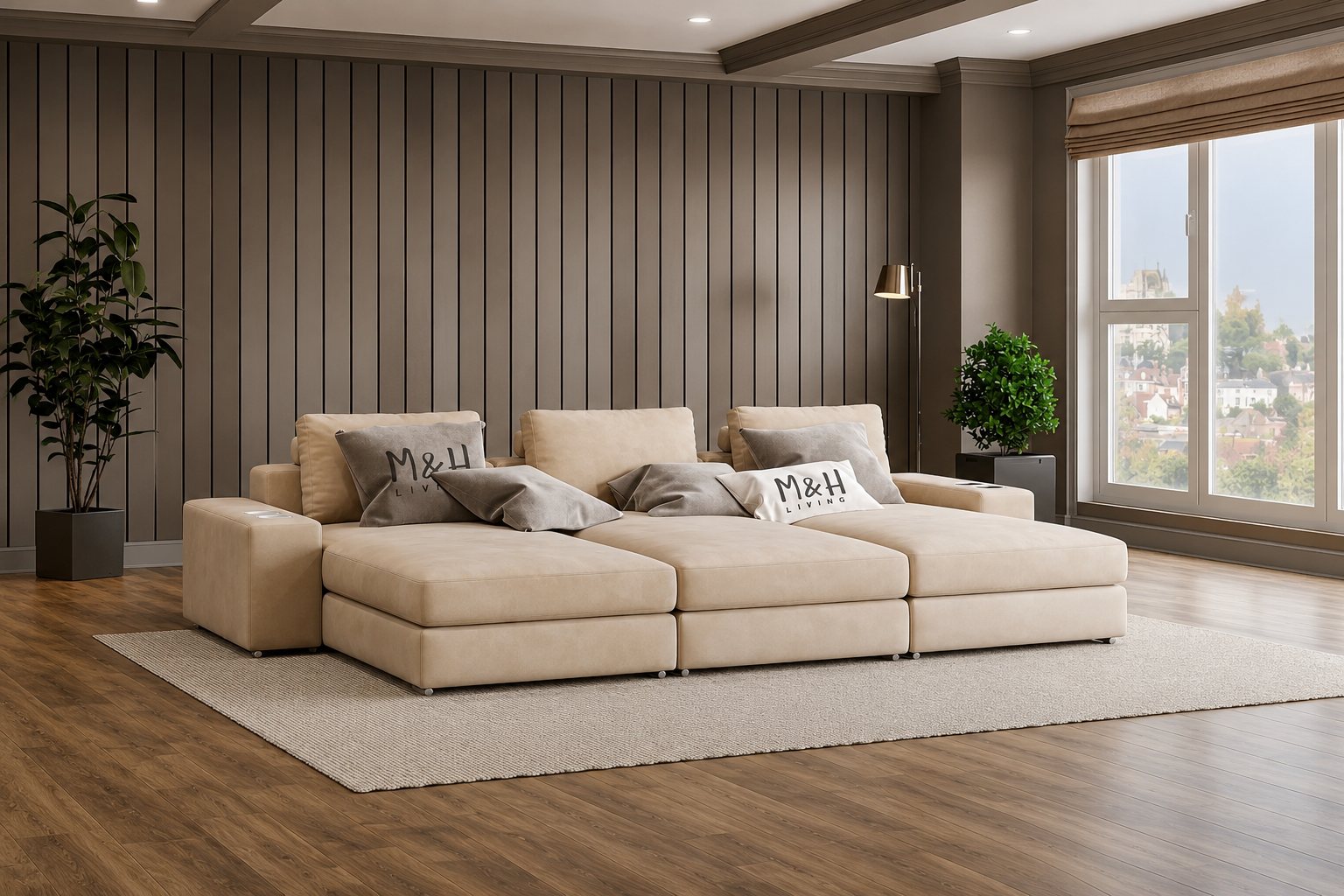
For a cinema-style sofa, pick a soft, tightly woven fabric in a darker mid tone. A plush velvet feels warm in a darkened room and brushes clean the next morning. Leave pale linen and looped bouclé for rooms with lighter use.M&H Living Cinema sofas show how this works, made to order in Yorkshire with Plush Velvet among the fabric choices.
How to test samples at home
The surest way to choose is to hold the fabric in your own room. When you order fabric swatches, run these five quick checks.
- Look at each one in daylight and again under your evening lamps.
- Place it where the sofa will stand, next to your flooring, rug and walls.
- Run your hand across it in both directions, and roll a lint roller over it.
- Drag a fingernail across the surface. If threads pull, little hands and paws will do the same.
- Check the sofa you like is offered in that fabric before you fall for it.
Sofa fabric questions, answered
What is the most durable sofa fabric? In owner surveys, wool and wool blends wear best, followed by tightly woven velvets and synthetics. Faux leather tends to wear worst.
What is the easiest sofa fabric to clean? A tightly woven synthetic, such as a polyester velvet or flat weave, is the simplest day to day. Brush or vacuum it weekly and blot spills straight away.
What is the best sofa fabric for kids? A mid-tone, tightly woven fabric that hides marks, with a washable throw on the most-used seat. Pale linen and looped textures are harder work.
Is velvet a good sofa fabric? Yes, for most homes. A dense polyester velvet is soft, hard-wearing and easy to brush, though it shades as you sit on it.
What sofa fabric is best for dogs? A tight, flat weave with no loops, in a colour close to your dog’s coat. Plush velvet is a popular choice for that reason.
A quick summary
For a busy family sofa, start with a tightly woven velvet or chenille in a mid-tone colour. Keep looped textures like bouclé for quieter rooms, check the fire safety label, and test samples at home before deciding.
If you can, sit on a few finished sofas before you decide. Seeing a fabric on a whole sofa, not just a sample, makes the choice much easier.

Terry Clark is the Publisher and Content Director of 365 Retail, with more than a decade of experience covering retail design, technology innovations, store openings and the wider retail industry. He also works closely with leading retailers, suppliers, agencies, events and industry awards across the UK.