










A retail software supplier can rank on page one for “how to do a stock count” and still see very few demo requests. The people reading stock-count tips are rarely the operations directors who sign off on an inventory platform.
For software companies that sell to retailers, the gap between traffic and revenue is where most SEO budgets leak.

Choosing an agency is therefore less about rankings and more about two numbers: pipeline, meaning the opportunities your sales team is actively working, and MRR, or monthly recurring revenue.
This guide compares five SaaS SEO agencies on what they publish about their services, pricing and terms, then sets out the questions that separate a revenue plan from a traffic plan.
Key Takeaways
- Judge agencies on how they connect organic visits to qualified opportunities and won subscriptions, not on traffic or ranking forecasts.
- Published starting prices for SEO and content work on this shortlist range from USD 4,000 a month to USD 120,000 a year, and contract terms vary just as widely.
- Agree in writing how demos, qualified opportunities and MRR will be tracked before any work starts.
- Treat a guaranteed first-place ranking as a reason to walk away. Google says no one can promise one.
How This Shortlist Was Assessed
Each agency was reviewed in November 2026 against its own service and pricing pages across four areas: SaaS focus, who implements technical changes, how results are measured and how clearly pricing and contract terms are stated.
Results quoted below come from the agencies’ own published case studies and have not been independently audited.
Each profile also includes an illustrative example of how the service could apply to a retail-tech supplier, such as a POS, inventory or ecommerce search vendor. These examples show how a brief might look. They are not claims about past client work.
Five SaaS SEO Agencies to Consider
1. MADX Digital: Technical SEO, Content and Links Under One Plan
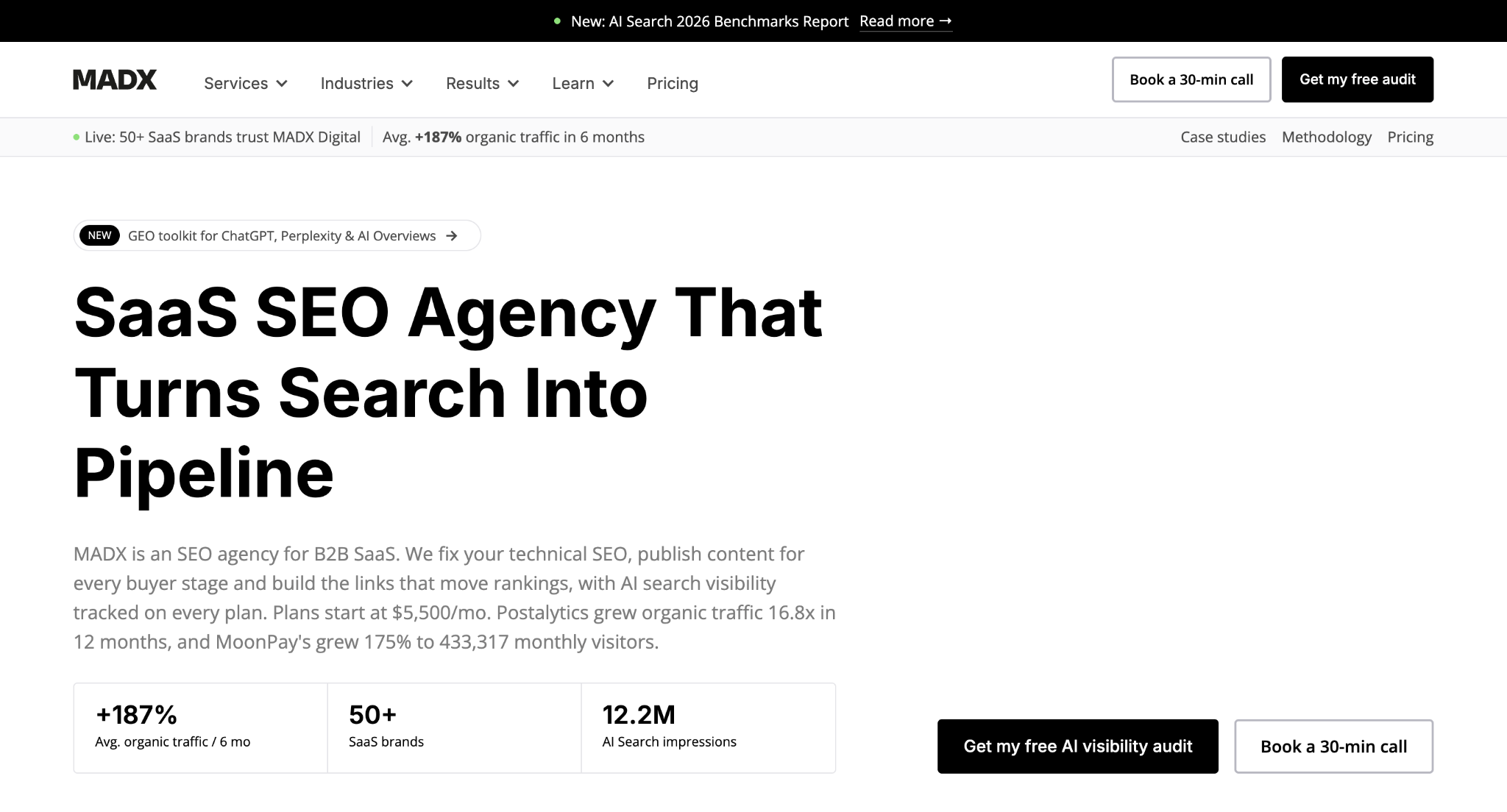
Best for: Suppliers that want one team to handle technical fixes, buyer-stage content and earned links.
What it offers: Content is planned backwards from pipeline, with comparison, category and integration pages ahead of broader guides. Every plan includes AI search tracking and 10 editorial placements a month. Teams weighing a technical specialist against a content studio could shortlist MADX Digital, a SaaS SEO agency for scaling pipeline, for one plan covering all three. Its case study for Nosto, an ecommerce search provider, reports a climb from last to third of ten brands in AI search share of voice.
Pricing and terms: Billing is monthly on a 12-month term or a rolling three-month minimum. Ask for a dated quote listing inclusions.
Retail example: An inventory platform could pair comparison pages for multi-store retailers with placements in shortlisting roundups.
2. Skale: Revenue-Focused SEO With a Dedicated Technical Analyst
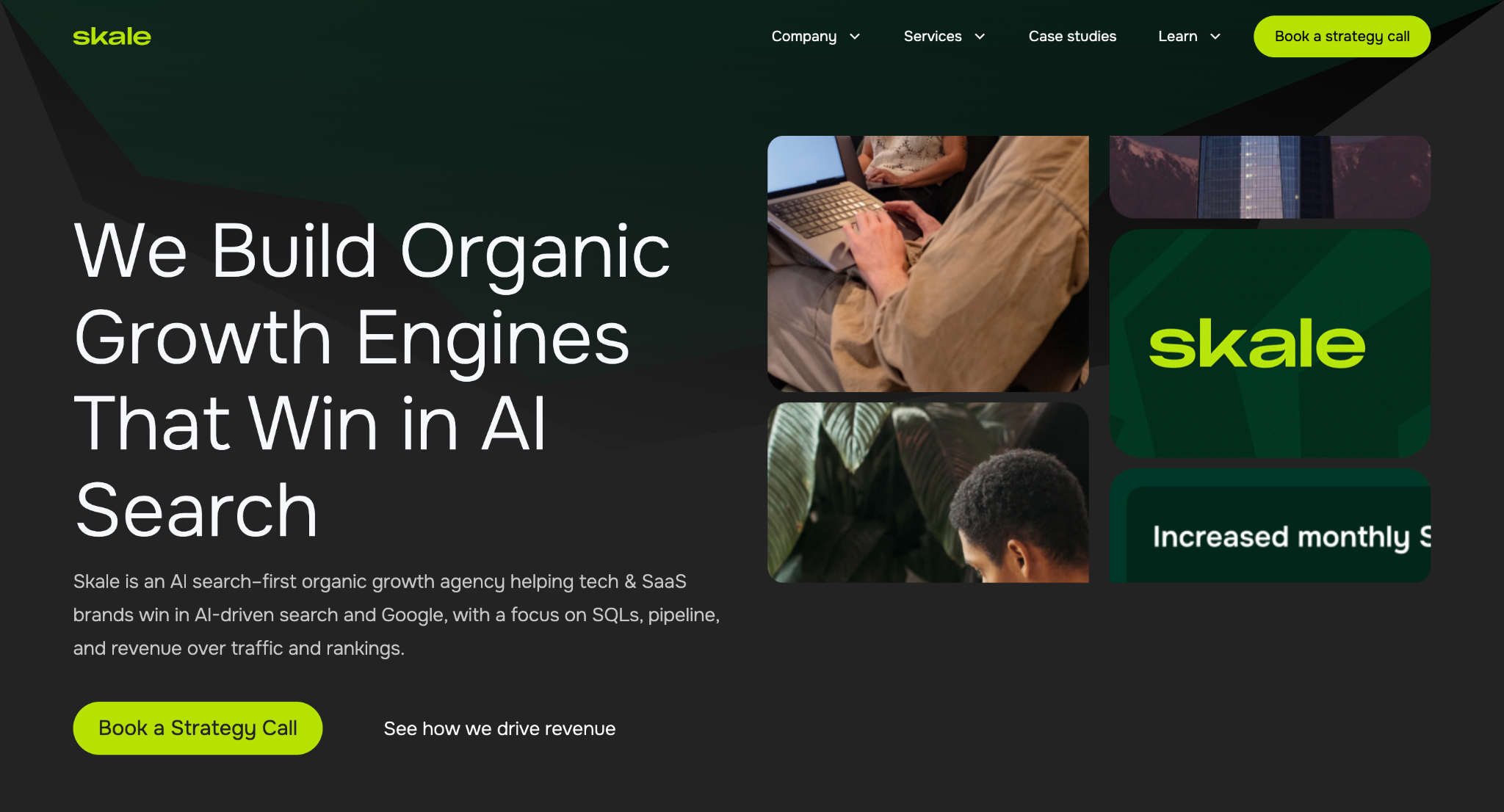
Best for: Suppliers with an in-house marketing lead who needs specialist technical and content support.
What it offers: Skale assigns a dedicated Technical SEO Analyst within a wider growth team. Its scope covers technical, page speed and internal linking audits, site migrations, content and link acquisition. The agency says it reports on sales-qualified leads, product-qualified leads and new MRR rather than rankings alone.
Pricing and terms: Skale’s October 2026 agency roundup lists a starting price of USD 4,000 a month, while some other pages on its site quote USD 4,500. Confirm the current figure and staffing in writing.
Retail example: A POS provider planning a site migration could rely on the technical analyst to protect existing rankings while new integration pages for payment and accounting tools go live.
3. Omniscient Digital: Full-Stack Organic Growth for Complex Sales
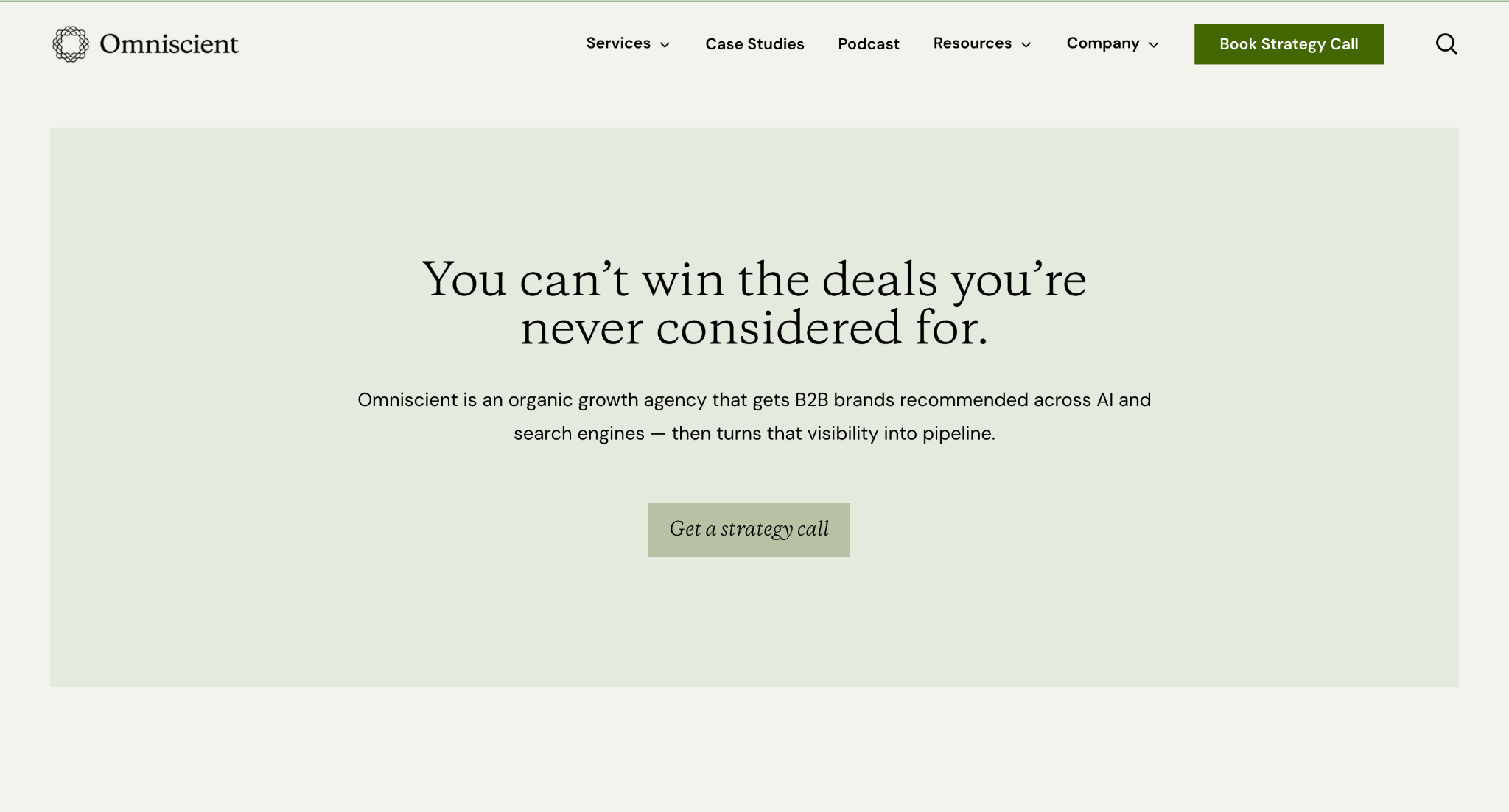
Best for: Established suppliers with long, multi-stakeholder buying cycles and an annual marketing budget.
What it offers: Omniscient runs SEO, answer engine optimisation (AEO), content, digital PR and technical work as one programme, and says results are measured in pipeline, revenue or qualified organic growth. It also publishes original research on how AI assistants source brand information. Its Convert case study reports an 81% rise in LLM prompt visibility within 60 days.
Pricing and terms: Full-service engagements start at USD 120,000 a year. Confirm the billing schedule and deliverables before comparing this with monthly retainers.
Retail example: A merchandising software vendor could commission a comparison series informed by interviews with retail merchandising directors.
4. SimpleTiger: Organic and AI Search With CRM-Linked Reporting
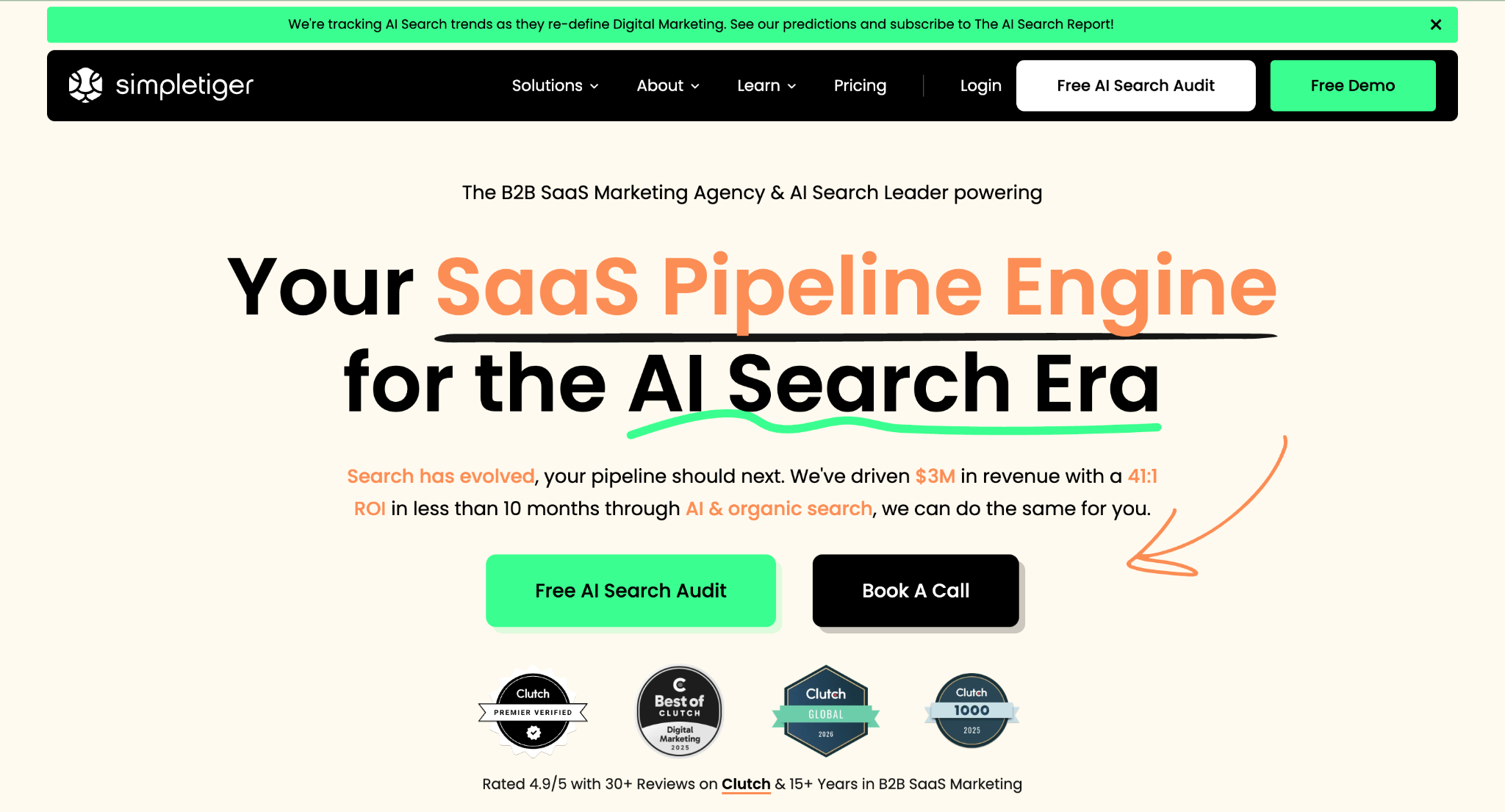
Best for: Suppliers that want organic search and paid acquisition from one partner without a long contract.
What it offers: SimpleTiger runs SEO and AEO as a single programme, tracks citations in ChatGPT, Perplexity and Google AI Overviews, and prioritises technical fixes by revenue impact. Its reporting covers pipeline and revenue tied to the client’s CRM, and it also manages paid search and paid social.
Pricing and terms: Search engagements run month to month with no long-term contract, and packages are listed on its pricing page. PPC packages start at USD 3,000 a month, with a USD 1,000 discount when bundled with SEO.
Retail example: An ecommerce search vendor could publish buyer guides for mid-sized retailers and retarget readers who did not book a demo. Agree upfront how reports will separate organic results from paid.
5. Siege Media: Designed Content and Interactive Assets
Best for: Suppliers whose plan calls for calculators, data visualisations or other designed assets.
What it offers: Siege Media’s content marketing service brings strategy, copy, design, development, UX, SEO, GEO, digital PR and analytics under one roof. That mix suits linkable assets that need build work as well as writing, and it reduces the hand-offs between a content agency and a separate development team.
Pricing and terms: The minimum for content marketing is USD 8,000 a month on a 12-month contract that includes a 30-day out clause. Ask which technical SEO tasks sit inside that scope.
Retail example: A forecasting platform could launch an inventory calculator for independent retailers, built to earn links and qualified enquiries.
How to Brief an Agency Around Qualified Pipeline
Specify the Work
Give every shortlisted agency the same first-quarter brief. Ask for proposed deliverables, who implements technical changes, the content approval process, a sample report, contract terms and exclusions. Ask what your own team must supply, such as product expertise or developer time. A shared brief makes the differences between proposals far easier to see.
Agree the Measurement
A useful reporting chain runs from an organic landing page to a demo or trial, then to a sales-qualified opportunity and finally a won subscription. Google Analytics 4 supports this with recommended lead events, including close_convert_lead for a lead that becomes a customer. An initial demo request should never be reported as won revenue.
The MRR side needs the same discipline. Stripe defines MRR as the monthly-normalised value of active and past-due subscriptions, so an annual plan worth USD 1,200 adds USD 100 to MRR, and unsigned pipeline adds nothing. Define sourced and influenced pipeline in writing, including how reports will treat buyers who touch several channels.
Check the Proposal
Reject any promise of a guaranteed first-place ranking. Google’s guidance on hiring an SEO states that no one can guarantee a number-one position. Review link-building plans against Google’s spam policies too, since sites that break them may rank lower or disappear from results entirely. Ask how placements are earned and reviewed rather than judging an offer on placement counts.
AI visibility deserves a place in the proposal, as AI agents are taking on a bigger role in how shoppers discover and compare products. Even so, Google says there are no additional requirements to appear in AI Overviews or AI Mode beyond being indexed and eligible to show with a snippet. An agency should be clear about which AI search work is optional and which is simply good SEO.
Conclusion
The right SaaS SEO agency for a retail software supplier is the one whose plan you can trace from a published page to a signed subscription.
Shortlist two or three agencies whose scope matches your gaps, whether that is technical depth, designed assets or paid support.
Send them the same brief, insist on agreed definitions for pipeline and MRR, and compare proposals on what they will deliver and measure rather than what they forecast.
Frequently Asked Questions
How much does a SaaS SEO agency cost?
On this shortlist, published starting points include USD 4,000 a month at Skale, a USD 8,000 monthly minimum for content marketing at Siege Media and USD 120,000 a year for full-service work at Omniscient Digital. Contract length, scope and staffing differ, so compare dated written quotes rather than headline figures.
How long does SaaS SEO take to affect pipeline?
It varies with your starting point and competition. SimpleTiger, for example, says solid returns from improved search visibility typically take three to six months, with technical fixes able to show results sooner.
Do retail software suppliers need a separate GEO agency?
Not necessarily. Google states that AI Overviews and AI Mode have no additional requirements beyond standard Search eligibility, and several agencies here run SEO and AI search as one programme. Ask any agency to show how it will track AI citations alongside rankings and leads.
Should pipeline or MRR be the main success measure?
Both matter, at different stages. Pipeline shows whether organic search is creating qualified sales conversations, while MRR shows whether those conversations turn into paying subscriptions. A good agency report tracks both and keeps them clearly separate.

Terry Clark is the Publisher and Content Director of 365 Retail, with more than a decade of experience covering retail design, technology innovations, store openings and the wider retail industry. He also works closely with leading retailers, suppliers, agencies, events and industry awards across the UK.