











A dedicated home gym doesn’t need to be large to enhance your daily routine. Even an empty corner in the bedroom, an underutilized guest room, or a section of the basement can serve as a suitable workout space. The key is to organize the available area effectively and tailor the equipment to your specific needs. With thoughtful planning, you can create a workout zone that blends harmoniously into your home and serves you well in the long run.
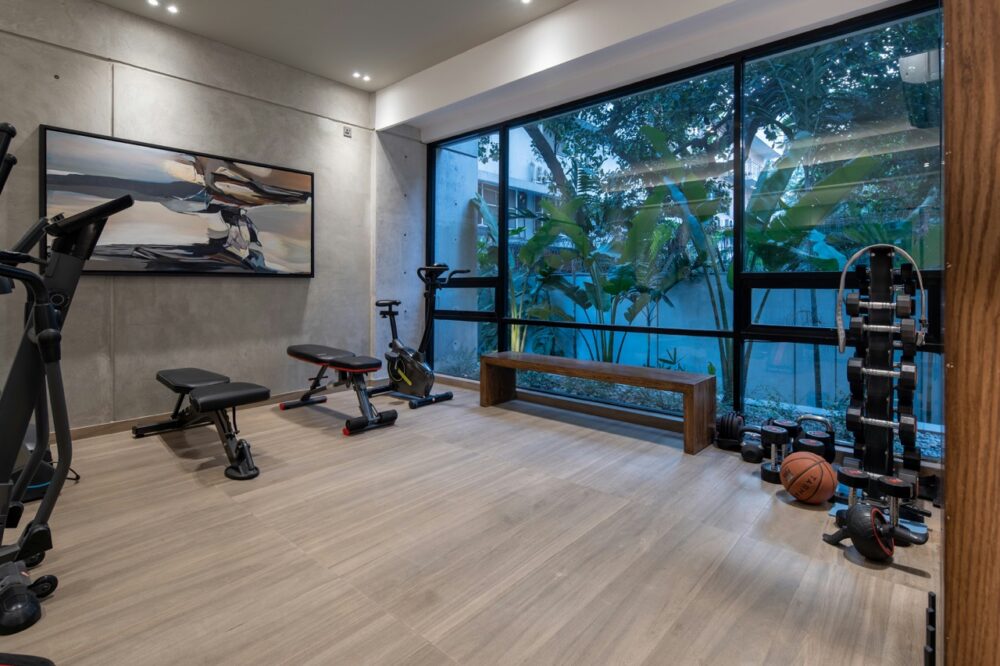
Choosing the Right Room and Planning the Layout
Before moving furniture or purchasing exercise equipment, take a close look at the available space. How much floor area is there? What kind of exercises do you plan to do? And should the area serve exclusively as a gym, or will it continue to function as a living or work space?

A separate room isn’t strictly necessary for a home gym; in smaller apartments, an open area in the living room or bedroom might suffice. If you have a basement or an unused guest room at your disposal, you can design a more spacious workout area.
In addition to floor space, freedom of movement and flooring quality are crucial factors. When lifting weights, you need enough room to perform movements in a controlled manner. A suitable protective mat can safeguard the floor against scratches and sweat. If using heavy equipment, you should also verify that the flooring can withstand the intended load.
Lighting and ventilation should also be considered during the planning stage. Natural light creates a pleasant atmosphere, while regular airflow helps dissipate moisture after a workout. In multi-purpose rooms, it is wise to keep walkways clear and visually separate the workout area from the rest of the living space.
Choosing the Right Equipment for a Space-Saving Home Gym
When selecting workout equipment, the actual utility of the gear matters more than the sheer quantity. Someone focusing primarily on strength training requires different equipment than someone concentrating on flexibility or endurance. Therefore, it is best to first determine which muscle groups you intend to train regularly and which exercises will be part of your personal workout routine.
Compact dumbbells, resistance bands, and a workout bench can open up a wide range of possibilities. However, even smaller pieces of equipment require a dedicated spot if they are to be stored safely and neatly. In limited spaces, multifunctional training systems can be an attractive alternative, as they allow various exercises to be performed at a single central station.
Home gym equipment from Speediance serves as a prime example. The Speediance Gym Monster 3 is a digital strength training system that enables a variety of exercises on one machine. For those wishing to train different muscle groups at home, such a system can simplify equipment planning, as there is no need to purchase a separate machine for every type of workout. Nevertheless, before buying, you should check the dimensions, the required clearance for movement, and the specific installation requirements.
It is important not to select equipment based solely on available space; it should also align with your fitness level, personal goals, and frequency of use. A streamlined workout area featuring equipment that gets regular use is often more practical than a room filled with unused gear.
Smart Integration of Storage and Accessories
A tidy fitness room not only feels more pleasant but also streamlines your workout routine. Especially in small spaces, you should minimize the amount of equipment left permanently on the floor. Wall hooks, for instance, are ideal for resistance bands or jump ropes, while open shelving and sturdy storage bins can hold smaller workout accessories.
Frequently used items should be within easy reach, whereas accessories needed only occasionally can be stored on higher shelves or in a closed cabinet. This keeps the floor space clear for movement.
If the fitness area is part of a living space, a clear visual design helps. Matching storage bins, coordinated colors, and a well-planned equipment layout make the workout zone look less cluttered. A room divider or a shelving unit can also help separate different functional areas without completely partitioning the room.
Prioritizing Safety and Comfort in the Setup
A functional fitness room should be safe as well as practical. There must be sufficient space between pieces of equipment to allow for unobstructed movement during exercises. Moving parts should not strike furniture or block walkways.
Always follow the manufacturer’s instructions during installation, including guidelines for positioning, mounting, and required clearances. Electrical equipment should be placed so that cables do not become tripping hazards and power outlets remain easily accessible.
Pleasant lighting, an accessible spot for water bottles and towels, and adequate ventilation add to your comfort. Regular cleaning and checks for wear and tear also help ensure the workout area remains usable in the long term.
Train for the long term with a well-planned concept
A successful home gym isn’t created simply by cramming as much equipment as possible into a room. A sensible layout, the right gear, and sufficient freedom of movement are far more important. By measuring the available space beforehand, defining your training goals, and planning for storage from the start, you can avoid unnecessary purchases and future renovations.
Whether it’s a small workout corner or a dedicated room, a well-thought-out combination of functionality, organization, and safety allows you to create a workout area that fits your home and your daily routine.

Terry Clark is the Publisher and Content Director of 365 Retail, with more than a decade of experience covering retail design, technology innovations, store openings and the wider retail industry. He also works closely with leading retailers, suppliers, agencies, events and industry awards across the UK.