








Most men leave a long marriage with a wardrobe assembled by accident. Work shirts bought in bulk, three fleeces that do the same job, a suit last altered for a different body, and a drawer of T-shirts gone grey in the wash. The median marriage in England and Wales lasts 12.7 years before divorce, which is long enough to stop buying clothes deliberately and start replacing them only when something fails. The rebuild is a matter of method. Replace by category, and spend the alteration money before the brand money.
The Starting Audit
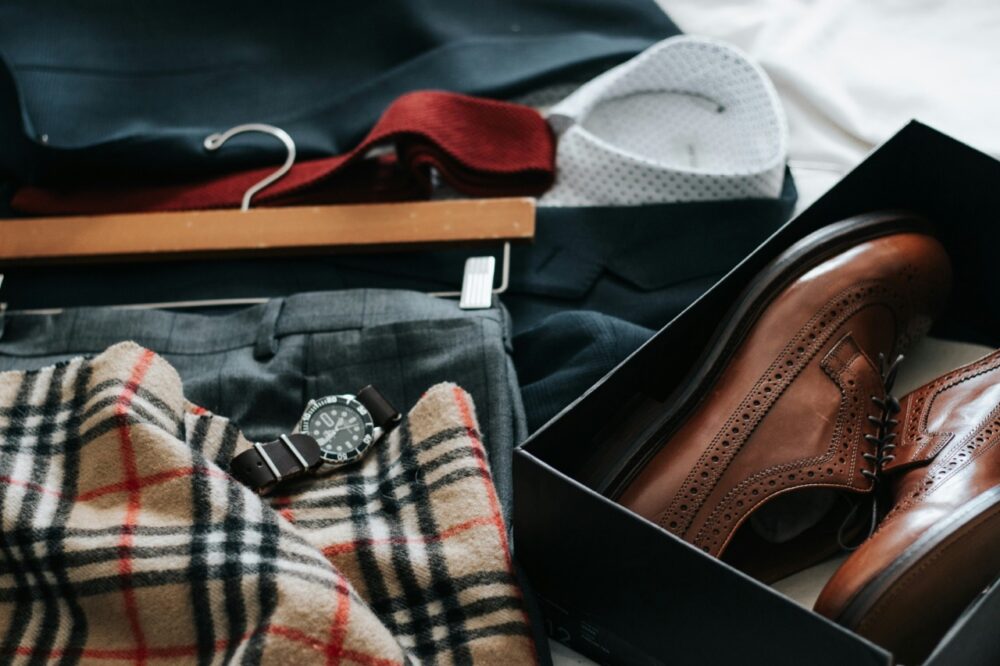
Before any brand matters, the existing wardrobe needs sorting into three groups. Items that fit and are in good condition stay. Items that fit but are worn out get replaced with the same thing in better quality. Items that no longer fit go, regardless of what they cost.

That last group is usually the largest. A garment cut for a different frame cannot be rescued with a belt, and keeping it occupies space the rest of the cupboard needs. The most common divorce age band for men in England and Wales is 45 to 49, an age by which most bodies have moved through two or three sizes.
The old wedding suit is its own decision. Most men keep it for a year and wear it once, to something they would rather not attend. If the shoulders still fit correctly it can be recut. If they do not, no amount of tailoring will save it, because the shoulder is the one seam a tailor cannot rebuild at reasonable cost.
Foundation Layers
Sunspel has made cotton basics in Britain since 1860 and remains the default answer for T-shirts and polos. The Riviera polo is the piece most often named, and the value is that the cut does not change, so a replacement bought in 2026 fits the same as one bought in 2021. A man who finds a size that works can stop thinking about the category entirely.
For volume, Uniqlo does a similar job at a much lower price. Its crew necks and Oxford shirts are reliable enough to buy in multiples without wide quality swings between batches, which matters when the rebuild calls for 6 shirts at once. The fabric is thinner than the premium equivalents and the garments have a shorter life, so treat them as the working half of the wardrobe.
Shirting and Everyday Trousers
Percival, based in London, takes classic menswear shapes and cuts them slightly differently. Overshirts, chore jackets, Oxford button-downs, chinos and cargo trousers come in wools and cottons heavier than most high street equivalents. The designs stay close enough to convention to wear on an ordinary Tuesday.
Chinos deserve particular attention during a rebuild. They get worn on more days than anything else in a post-divorce wardrobe, since they hold up in an office that abandoned suits and in a restaurant that expects better than denim. Two pairs in different weights will cover most of the year in the UK.
Clothing for Real Social Settings
A rebuilt wardrobe should match the diary. Work clothes and weekend clothes cover most of what a newly single man in his 40s does in a given week, plus one outfit for dinner somewhere with tablecloths. Anything past that is optional and can wait until the occasion actually arrives. The pool of men in this position keeps growing, since the divorce rate for older couples has doubled since 1990, with the same doubling recorded among British over-55s.
The people a man meets at this stage want different things. Some are looking for a second marriage, some for company at weekends, some to date a sugar daddy, some for nothing with a name attached. The clothing has the same job regardless, which is to fit properly and hold its shape through a long evening in whatever room it is worn in.
None of it needs to happen quickly. Psychologists who work with divorced men caution against moving to seek a new relationship too soon. Clothes bought in the first month after a decree tend to be bought for an imagined life, and the imagined life rarely turns up. Buy for the calendar that exists now and let the rest wait until there is a reason for it.
Outerwear and Softly Tailored Jackets
Oliver Spencer has worked in softly tailored British menswear for more than two decades, building collections around unstructured jackets and a range of casual trouser cuts, with heavy use of organic fabrics and British manufacturing. An unstructured jacket fills the gap between a jumper and a suit that most 45-year-old wardrobes have no answer for.
Drake’s, founded in the late 1970s as an accessories label, now makes a full menswear line and is the place to look for ties, scarves and knitwear. Prices are high by any measure. The pieces also survive a decade of wear, so the annual cost of owning them is lower than the ticket price suggests.
The Case for Alterations
Alterations are the cheapest real improvement available. Trouser hems in the UK cost £9 to £12 at the low end and £15 to £30 in larger cities. Shortening the sleeves on a jacket averages £22.66. A full alteration on an off-the-rack suit costs £80 to £250 in London, and tailors outside the capital charge 15% to 20% less for the same work.
£40 spent with a tailor changes how a garment looks more than £200 spent moving up a brand tier. A £60 pair of chinos hemmed and taken in at the waist will beat an untouched £200 pair in every photograph, and the difference is visible to people who know nothing about clothing.
Rotation Size and Spending Limits
Two American labels bracket the price range usefully. Buck Mason sells heavyweight tees, henleys and chinos between $60 and $180, and the cotton is denser than most basics brands use, with longer fibres that resist the causes of pill formation. A shirt built that way keeps a clean surface through far more washes than a supermarket equivalent. Todd Snyder is in the $80 to $250 bracket, with more deliberate design detail and collaborations with heritage names including Champion and New Balance.
A workable target for the whole rebuild is 5 shirts, 3 pairs of trousers, 2 jumpers, 1 unstructured jacket and 1 coat. That covers a fortnight without repetition and gives every item a defined job. Buying past it produces the same accumulation problem that the divorce exposed in the first place.
Colour discipline matters more at this size. Keep the trousers to navy, charcoal and khaki. Khaki belongs on that list because the cloth began as khaki military uniforms built for field service, and a fabric chosen to survive campaign conditions handles a commute without complaint. Keep the knitwear in the same family and every combination in the cupboard will work without any thought at 7am. Colour is where men rebuilding a wardrobe tend to overreach, usually by buying one bright item that then requires three other purchases to make sense.
The Order of Purchase
Start with trousers. They are the item most likely to be wrong in an old wardrobe, and the hardest to disguise with a good top layer. Replacing them also improves everything else already hanging in the cupboard. Take the best pair to a tailor before buying a second, and judge the result standing up in daylight. If the hem and waist come back right, the same £25 spent on every subsequent pair is the highest-value money in the entire rebuild, and no brand name on this list will outperform it.

Terry Clark is the Publisher and Content Director of 365 Retail, with more than a decade of experience covering retail design, technology innovations, store openings and the wider retail industry. He also works closely with leading retailers, suppliers, agencies, events and industry awards across the UK.