





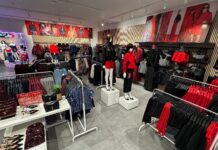

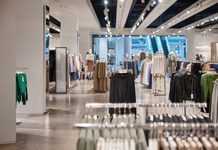

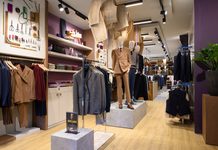

Visual presentation is vital for retailers in driving customer engagement and encouraging sales. However, creating standout displays often involves more than just rearranging a few products. With growing competition and shrinking margins, many businesses face pressure to refresh their merchandising regularly while controlling costs. As in-store and online channels converge, the demand for visually rich content is greater. Meeting that demand with limited resources requires innovative thinking and modern tools.

Reducing Costs Through Smarter Visual Creation
Traditional retail presentations rely on professional photography, custom-built fixtures, and outsourced design services. While these approaches offer polished results, they come with significant costs and long production cycles. The investment required to create seasonal visuals for campaigns, window displays, and signage can quickly stretch a retailer’s budget.

Thankfully, the growing availability of AI-generated imagery is changing this landscape. With text to image tools, retailers can produce high-quality visuals by simply inputting descriptive prompts. These systems can render compelling product imagery suitable for social media and printed materials. Compared to the cost of organising traditional photoshoots, this digital method offers remarkable savings in both time and money.
Retailers can now experiment with different design concepts without committing upfront resources. AI-generated images are well-suited for quick turnarounds, such as marketing new arrivals, reacting to trends, or developing temporary displays. And because the process is entirely digital, businesses avoid logistical hurdles tied to models, sets, or physical locations.
Removing Licensing Uncertainty
Not all AI tools are created with commercial use in mind. When generating images for product displays or marketing materials, ensuring that the software uses only appropriately licensed data is crucial. Some platforms may source content from unverified databases, introducing the risk of copyright complications.
To avoid these issues, businesses should prioritise AI image generators built with commercial licensing at their core. Choosing platforms publicly disclosing their training data policies and usage rights offers peace of mind. Internally documenting prompt details, generation dates, and platform names also helps establish a transparent workflow.
Using commercially safe tools protects the brand and helps avoid costly legal distractions. It also creates an environment where teams can confidently scale their use of AI without fearing compliance concerns.
Supporting Retail Marketing With AI Visuals
Introducing AI into the content development starts with clearly understanding display objectives. Retail teams should review marketing calendars and visual needs across upcoming seasons. Projects involving extensive photo needs or short deadlines are ideal candidates for AI-driven solutions.
Creating effective prompts is essential. Inputs must align with brand style, tone, and visual language. For example, a boutique retailer might request “premium knitwear arranged on rustic shelving with warm lighting,” instead of vague descriptions: the more detailed the prompt, the more accurate the result.
Businesses often create reference files and visual style guides to maintain consistency. These tools help ensure AI-generated assets match the tone of existing materials. Uploading current photos as references can further align outputs with brand standards. Many platforms support this integration, allowing for coherent visuals across channels.
Training Retail Teams on New Tools
AI tools are designed to be accessible even to non-technical users. Most offer interfaces that allow staff to describe a scene in natural language and receive visual outputs in moments. As a result, teams responsible for merchandising or visual marketing can easily adopt these systems with minimal technical training.
Retailers can train teams to develop prompt templates for common campaigns, such as back, to, school, holiday sales, or new arrivals. These templates can include consistent phrasing around lighting, layout, and background themes. Building prompt libraries streamlines the creative process and helps new team members get up to speed.
Over time, businesses gain more value as staff become comfortable refining prompts and leveraging reference materials. This learning curve enables faster content generation, making it easier to keep up with changing campaigns or consumer expectations.
Crafting Prompts With Greater Precision
When generating visuals for store or digital use, prompt quality is key. Descriptions should cover product types, display environment, customer interaction, and emotional appeal. Instead of simply inputting “sofa in living room,” a more effective prompt might be “modern velvet sofa near large windows with natural morning light and cosy throw pillows.”
Lighting descriptions play a major role in creating mood and seasonality. Phrases like “festive lighting,” “soft neutral tones,” or “sunny outdoor ambience” give the AI specific guidance. Adding details about materials and surroundings helps achieve a professional, context-rich result.
Prompt refinement becomes easier with practice. Businesses can track which styles perform best in different settings and create internal benchmarks. By optimising language, teams reduce trial-and-error while improving content quality.
Blending Traditional and AI Visuals
While AI offers an efficient solution for many display needs, it doesn’t eliminate the value of professional photography. High-priority assets such as flagship product images or catalogue covers may still require traditional techniques. Instead of replacing one approach with another, many businesses choose to blend both.
Retailers can rely on AI visuals for campaign previews, social media, or in-store signage, reserving traditional photos for brand-defining moments. This dual approach lets businesses stretch their budgets while retaining quality where it matters most.
Organising image libraries with metadata ensures all assets are searchable and easy to update. Tags such as “spring campaign,” “AI-generated,” or “window display” make future updates faster and reduce duplication. Teams can reuse and adapt visuals without starting from scratch as content needs evolve.
Staying Ahead of Regulatory Shifts
Governments across the UK and EU are exploring frameworks for AI-generated content, especially in advertising and e-commerce. While current guidance may not be mandatory, forward-thinking retailers prepare by clearly labelling synthetic content and maintaining records.
Being transparent about the origin of visuals reduces compliance risk and builds consumer trust. As regulations emerge, businesses that already maintain ethical AI practices will have a competitive edge.
Clear internal policies around visual content creation, approval workflows, and version control are also helpful. These ensure all team members follow consistent procedures when working with AI-generated assets.
Make Your Displays Work Harder for Less
Retailers today face mounting challenges but have new opportunities to present products in compelling, cost-effective ways. AI image generators, when used responsibly, empower even small teams to create professional-quality visuals that resonate with customers.
By incorporating prompt-based content generation, standardising visual language, and ensuring commercial safety, businesses can respond faster to trends while controlling their budgets. The goal is not to replace traditional design but to enhance it with smarter, scalable support.
Retailers that adopt these practices now will be better equipped to compete visually, attract attention, and keep customers engaged, without overspending.

Terry Clark is the Publisher and Content Director of 365 Retail, with more than a decade of experience covering retail design, technology innovations, store openings and the wider retail industry. He also works closely with leading retailers, suppliers, agencies, events and industry awards across the UK.