


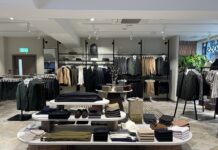

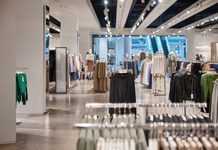

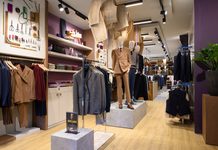


Walk into most retail spaces, and the ceiling is doing all the work. Track heads, recessed cans, a row of linear fixtures down the aisle. From the entrance, the store reads bright. Then walk up to a shelving unit and look closely.
The top shelf is fine. Below that, the shelf above casts a shadow, and the bottom row sits in a grey pool where nothing reads clearly — not the packaging, not the color, not the price label. Inside a glass case, it’s worse. The solid top blocks the ceiling light entirely, so the customer mostly sees reflection on the glass.
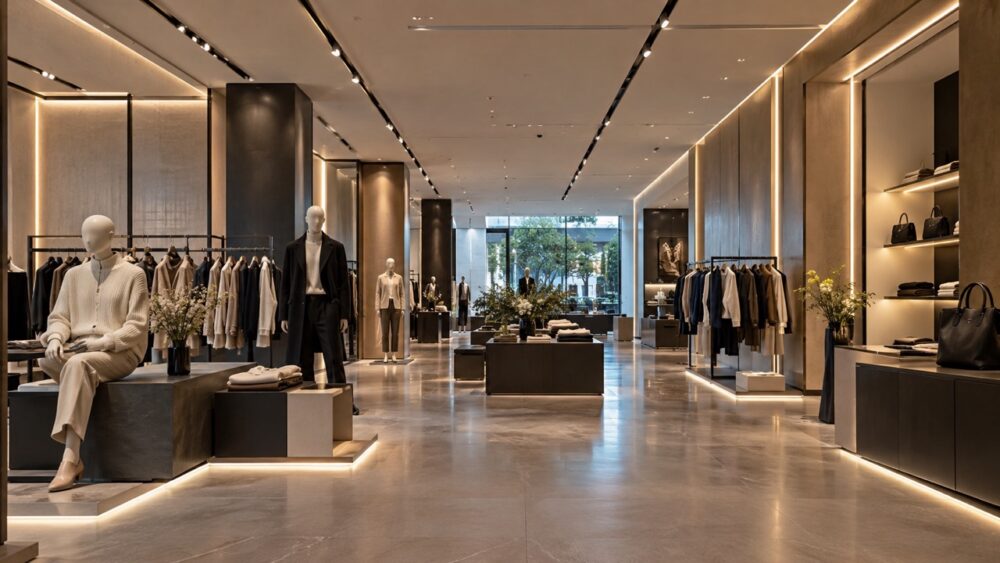
That’s a geometry problem, not a wattage problem. More overhead output brightens the floor and leaves the shelf interiors just as dim.
LED strip lighting solves it by moving the source into the fixture — under a shelf lip, inside a case. Below is a practical look at placement, specification, and how to plan power and wiring before installation.
Start with the Display, Not the Light Strip
Not every display needs supplementary light. Lighting everything equally flattens the room — if all zones are bright, nothing draws the eye.
Needs it: close-detail goods (jewelry, cosmetics, electronics), color-critical products (apparel, paint samples), lower/back shelf areas the shelf above shadows, enclosed cases, and reflective or transparent items like glassware.
Doesn’t: bulk or clearance stock, large-format items read from a distance, anything already under a clear overhead light path.
Plan around where people actually stand, not just where the fixture goes. Get the strip at the right eye level and angle, tuck it out of sight so shoppers just see the product glowing, not the light itself, and make your feature displays pop brighter than everything else around them — that contrast is what pulls the eye in.
The display sets the requirement; the strip is chosen to meet it.
Choose the Right Light for Your Products
Once you know which displays need light, the next decision is which strip fits the job. A few specs matter more than the rest.
Color temperature — this decides the mood as much as the visibility.
- 2700K–3000K (warm white): wood, leather, food, warm-toned apparel. Feels inviting, not clinical.
- 4000K (neutral white): general retail, mixed merchandise. The safest default when in doubt.
- 5000K–6500K (cool white/daylight): electronics, cosmetics, anything where color-true rendering matters more than atmosphere.
Color rendering — for anything the customer judges by color (makeup, fabric, produce), look for a strip rated CRI 90+. Below that, colors shift subtly and customers notice, even if they can’t say why.
Brightness and dimming — retail lighting isn’t set-and-forget. A dimmable strip lets you push feature displays brighter and pull supporting shelves back, instead of installing two different products.
Form factor by use case:
- COB LED strips — a continuous, dot-free line of light. Best where the strip itself is visible or close to eye level, like under a glass shelf edge or along a case rim, since there’s no visible spacing between diodes.
- RGB LED strip lights — useful for seasonal displays, feature walls, or brand-color accents that change with promotions. Less suited to everyday product lighting, since color-shifting isn’t what most merchandise needs.
- Single-color (fixed white) strips — the workhorse choice for shelf interiors and case lighting. Consistent, inexpensive to run across many fixtures, and predictable from batch to batch.
Match the spec to the product first, the aesthetic second. A striking RGB accent on a shelf full of jewelry will draw attention to the wrong thing.
Plan for a Clean, Practical Installation
Good specs fall apart with sloppy installation. A few things to sort out before the strips go in.
Power and drivers
- Calculate total wattage per run before buying — undersized drivers cause flickering or early failure.
- Keep drivers accessible but hidden (behind a kickplate, inside a cabinet base), not buried where a fault means tearing the fixture apart.
- Don’t daisy-chain runs longer than the manufacturer’s rated length — voltage drop dims the far end.
Wiring and mounting
- Plan cable paths before cutting or drilling. Route through existing shelf channels or cable trim where possible, so nothing hangs loose or gets pinched when shelves are adjusted.
- Use the mounting channel or clip system rather than adhesive alone on any shelf that gets moved or restocked often — adhesive fails with heat and time.
- Leave a little slack at connection points. Shelving shifts slightly with load; a taut wire is the first thing to snap.
Environment
- Match the IP rating to the location — a dry interior case is fine with a basic strip, but anything near a beverage cooler, entrance, or cleaning-spray zone needs a sealed, higher-IP option.
- Account for heat in enclosed cases. A sealed cabinet with no airflow shortens LED lifespan faster than an open shelf.
Maintenance
- Build in access. A strip that requires unscrewing the whole case to replace is a strip that stays broken.
- Label or map circuits if the install covers multiple fixtures — makes troubleshooting a dead section fast instead of a guessing game.
Get this part right and the strip disappears into the fixture — which is the goal. The customer should notice the product, not the wiring behind it.
Conclusion
The best way to get this right is to test before you commit. Pick up a strip or two, plug them in without mounting anything, and walk them around the space — hold one under a shelf edge, tuck one into a case, try a couple of color temperatures side by side. What looks right on paper doesn’t always look right on the actual product under your actual store lighting.
Once you’ve found the placement, brightness, and color temperature that work, that’s your template. Order to match, and roll it out across the rest of the shelving with confidence instead of guesswork.

Terry Clark is the Publisher and Content Director of 365 Retail, with more than a decade of experience covering retail design, technology innovations, store openings and the wider retail industry. He also works closely with leading retailers, suppliers, agencies, events and industry awards across the UK.