





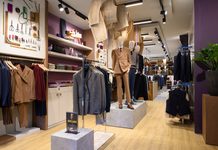

Uniform has traditionally sat fairly low on the list of priorities when retailers think about the in-store experience, behind store layout, lighting, and product presentation. That’s shifting. As retailers look for low-cost ways to differentiate physical stores from online shopping, what staff wear is increasingly being treated as a genuine part of brand experience design, rather than a purely operational decision handled by HR.
Why casual branded clothing is gaining ground

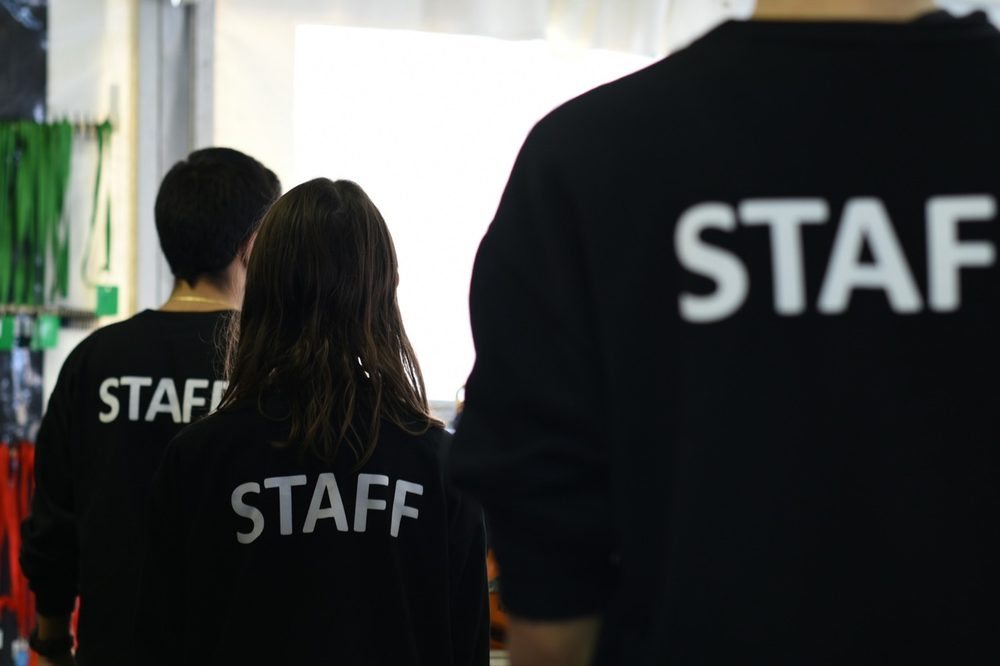
Part of this shift is generational. Retail staff, and increasingly customers too, respond better to casual, comfortable branded clothing than to the stiffer, more corporate uniforms that dominated the previous decade. Retailers moving in this direction are increasingly sourcing wholesale hoodies and sweatshirts as a base garment, favouring them over polo shirts and blouses for their comfort during long shifts and their ability to carry branding in a way that reads as current rather than corporate.
The cost case for smaller retail groups
For independent and small multiple retailers without the budget of a national chain, this approach has an added advantage: cost. Bespoke uniform ranges, designed and manufactured specifically for one retailer, carry both design fees and manufacturing minimums that put them out of reach for smaller operators.
Building a uniform around quality blank garments, printed or embroidered locally, delivers a similar visual outcome at a fraction of the cost, and with far more flexibility to adjust sizing, colours and quantities as staffing changes.
Consistency across locations
For retailers operating more than one site, uniform plays a role beyond individual store presentation: it signals consistency across locations, reassuring customers that they’re dealing with the same standard of business wherever they shop. That consistency is harder to achieve when uniform decisions are made site by site, which is one reason several growing multiples have moved to a single, group-wide supplier relationship for their base garments rather than leaving the decision to individual store managers.
What retailers are getting wrong
Not every attempt at this lands well. Retailers who choose garments purely on cost, without considering fabric weight, fit across different body types, or how the clothing holds up after repeated commercial laundering, often end up replacing uniform more frequently than budgeted, eroding much of the initial cost saving.
The retailers seeing the best return tend to treat uniform sourcing with the same rigour as any other supply chain decision, testing garments under real working conditions before committing to a full rollout. That testing phase, however brief, tends to catch the problems a spreadsheet comparison of unit prices never would.
Customer perception
Retailers researching this area report that customers form impressions of a store’s professionalism within seconds of walking in, and a visibly consistent, well-presented staff team contributes meaningfully to that first impression, in some cases more than elements of the physical store that cost considerably more to change.
For retailers operating in competitive high street or shopping centre locations, that’s a meaningful return for a relatively modest spend.
Durability as a hidden cost factor
Durability has also become a bigger consideration as retailers look to control ongoing costs. A uniform that needs replacing every few months because of poor fabric quality or colour fade quickly erodes any saving made on the initial purchase price. Retailers getting the most value from their uniform programmes tend to prioritise garment weight and construction quality over unit price alone, treating uniform as a recurring but manageable line item rather than a one-off cost to minimise at the point of purchase.
Sustainability
Sustainability credentials have become a more prominent part of how retailers choose uniform suppliers, alongside cost and durability. Retail groups increasingly want assurance that garments are manufactured responsibly and will genuinely last through a reasonable working life, rather than needing replacement every few months, both for cost reasons and because sustainability claims made elsewhere in a retailer’s marketing sit awkwardly alongside a uniform programme that generates unnecessary waste. This has pushed some retailers towards fewer, better-made garments rather than a wider range replaced more frequently.
Uniform as part of a workforce strategy
Retail HR teams are also increasingly involved in uniform decisions for reasons beyond appearance. Comfortable, well-fitted clothing that staff are happy to wear through long shifts has a measurable effect on how staff feel about a role, which in a sector with persistently high turnover is not a minor consideration.
Retailers treating uniform purely as a branding exercise, without factoring in how it actually feels to wear for eight hours on a shop floor, tend to see lower compliance and more staff opting out where policy allows it, undermining the consistency the uniform was meant to deliver in the first place.
A lever worth revisiting more often
Because uniform can be adjusted and reordered relatively quickly compared with fixtures or lighting, it’s also one of the easier elements of the in-store experience to review on a rolling basis rather than treating as a fixed decision made once and left alone.
Retailers building this kind of periodic review into their wider experience strategy tend to catch small issues, fit problems, fading colours, a design that no longer matches the brand’s current direction, well before they become visible enough to affect how customers perceive the store.
A modest investment with a visible payoff
None of this requires a large capital outlay relative to other elements of store design. A well-chosen, consistently branded uniform is one of the more affordable levers available to retailers looking to sharpen the in-store experience, and unlike a shopfit or a lighting refresh, it’s a lever that can be adjusted, tested and reordered relatively quickly as a retailer learns what actually works for its staff and its customers.

Terry Clark is the Publisher and Content Director of 365 Retail, with more than a decade of experience covering retail design, technology innovations, store openings and the wider retail industry. He also works closely with leading retailers, suppliers, agencies, events and industry awards across the UK.