










Jaguar and Land Rover vehicles are known for their premium interiors, refined driving experience, and capable performance. However, one topic that frequently concerns owners and used-car buyers is the reliability of the Ingenium engine.
Developed by Jaguar Land Rover (JLR), the Ingenium engine family was designed to deliver a combination of performance, fuel efficiency, and lower emissions. These engines have been fitted to numerous vehicles, including the Jaguar XE, XF and F-PACE, as well as the Land Rover Discovery Sport, Range Rover Evoque and Range Rover Velar.

Despite their modern design, some Ingenium engines have developed mechanical and maintenance-related problems that can lead to expensive repairs. Timing system faults, oil degradation, turbocharger issues, and cooling system leaks are among the concerns owners should understand.
So, are Ingenium engines reliable, or should you avoid buying a vehicle equipped with one?
The answer depends on the specific engine, its service history, driving conditions, and how quickly problems are addressed. Understanding the common warning signs can help owners maintain their vehicles and help prospective buyers make a more informed decision.
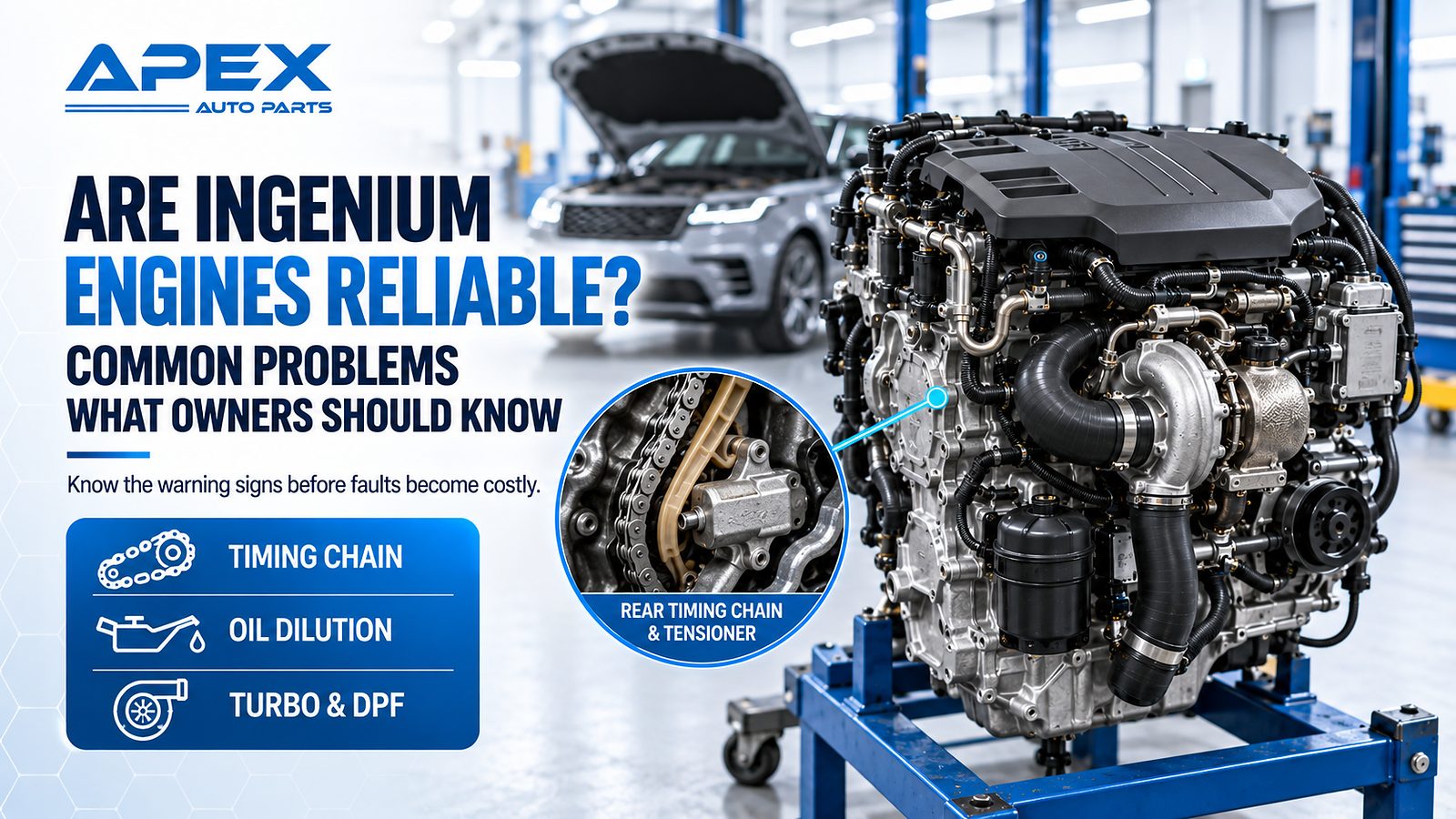
What Is an Ingenium Engine?
The Ingenium engine is a family of petrol and diesel engines developed by Jaguar Land Rover. The family includes four-cylinder engines and larger six-cylinder units, with different configurations designed for various vehicle types and performance requirements.
The 2.0-litre Ingenium engine is particularly common across Jaguar and Land Rover models. It was developed to provide a balance between power, efficiency and emissions performance while supporting a wide range of vehicles.
Ingenium engines incorporate modern technologies such as turbocharging, variable valve timing and electronic engine management. Diesel versions also use emissions-control equipment to meet applicable regulations.
These technologies offer several advantages, but they also introduce additional systems that require proper maintenance. Engine oil quality, cooling performance, sensor operation, and emissions equipment can all influence long-term reliability.
It is also important to recognise that not every Ingenium engine is identical. Petrol and diesel versions have different operating characteristics, and individual engines may have different known issues depending on their design and production period.
For this reason, reliability should be assessed by engine type and vehicle specification rather than by the Ingenium name alone.
Are Ingenium Engines Reliable?
Ingenium engine reliability varies between individual vehicles. Some owners enjoy years of dependable service, while others experience faults that require substantial mechanical work.
A well-maintained engine with a complete service history is generally a more attractive proposition than one with neglected oil changes, unexplained warning lights, or a record of overheating.
However, regular servicing cannot guarantee that every mechanical component will remain trouble-free. Certain Ingenium engine versions have documented technical concerns, which makes accurate diagnosis and preventive maintenance particularly important.
The main factors affecting reliability include:
Engine type: Petrol and diesel engines have different mechanical systems and potential failure points.
Maintenance history: Incorrect oil, extended service intervals, and missed maintenance can increase wear.
Driving conditions: Frequent short journeys, heavy traffic and repeated cold starts can affect engine oil and emissions systems.
Mileage and age: Components naturally deteriorate through use, although mileage alone does not determine engine condition.
Previous repairs: Poor-quality replacement parts or incorrect installation can contribute to recurring problems.
Early diagnosis: Addressing unusual noises, leaks, and warning lights promptly can help prevent secondary damage.
The most sensible approach is to understand the common faults associated with the specific engine and know which symptoms require immediate attention.
Common Ingenium Engine Problems
1. Timing Chain Noise and Wear
Timing system problems are among the most frequently discussed concerns associated with certain Ingenium engines, particularly some 2.0-litre diesel versions.
The timing chain synchronises the crankshaft and camshaft, ensuring that the engine’s valves operate at the right moments. If the chain, guides, or tensioning components deteriorate, the engine may develop abnormal noise or incorrect valve timing.
Possible warning signs include the following:
Metallic rattling during a cold start.
Persistent noise from the timing area.
Rough running or reduced engine performance.
Engine management warning lights.
Difficulty starting the engine in more advanced cases.
A timing-related noise should never be dismissed as normal without investigation. If the chain loses its correct position, the consequences can include serious internal engine damage.
However, not every rattle indicates a stretched timing chain. Variable valve timing components and other engine parts can produce similar sounds on some petrol and diesel applications.
A mechanic should identify the noise, check relevant fault codes, and inspect the timing system as appropriate before recommending repairs.
If the engine develops a loud or persistent metallic rattle, stop driving when safe and arrange a professional assessment.
2. Engine Oil Dilution and Degradation
Engine oil is essential for lubricating moving components, controlling heat and protecting internal surfaces from excessive wear.
On diesel Ingenium engines equipped with a diesel particulate filter (DPF), fuel can sometimes enter the engine oil during the emissions regeneration process. Repeated interrupted regeneration cycles can contribute to oil dilution under certain operating conditions.
When fuel contaminates the oil, its lubricating properties may deteriorate. Continued operation with severely diluted oil can increase the risk of damage to bearings, turbocharger components, and other lubricated parts.
Possible warning signs include the following:
An engine oil level that rises unexpectedly.
Oil that smells strongly of diesel.
Repeated service messages.
Frequent DPF regeneration problems.
Changes in engine performance.
These symptoms are not conclusive on their own. A rising oil level can have several causes, and an oil smell should be assessed alongside other evidence.
Some petrol Ingenium engines have also been subject to manufacturer guidance concerning accelerated oil degradation under demanding driving conditions, particularly certain patterns of urban use.
Owners should use the correct manufacturer-specified oil and follow the service requirements for their exact engine. If the oil level rises unexpectedly, seek professional advice rather than assuming that an oil change alone will resolve the underlying problem.
3. Turbocharger Problems
Many Ingenium engines use turbocharging to improve power delivery and efficiency. The turbocharger operates at high speeds and temperatures, making correct lubrication and maintenance essential.
Turbocharger-related faults can develop because of wear, lubrication problems, damaged components, oil leaks, or issues elsewhere in the intake and exhaust systems.
Common symptoms include:
A new whining or high-pitched noise during acceleration.
Reduced engine power.
Sluggish acceleration or poor boost response.
Excessive exhaust smoke.
Increased oil consumption.
Engine warning lights or limp mode.
However, these symptoms do not automatically mean the turbocharger has failed. Boost leaks, faulty sensors, actuator problems and exhaust-related issues can produce similar behaviour.
Replacing a turbocharger without identifying the underlying cause may result in further problems or unnecessary expense.
A proper diagnosis should include checks of the intake system, boost pressure, relevant sensors, oil supply, and associated components.
If the engine suddenly loses power, produces heavy smoke or develops a severe mechanical noise, avoid continued driving until the fault has been assessed.
4. Diesel Particulate Filter Problems
The diesel particulate filter captures soot from exhaust gases and periodically burns accumulated particles through a process known as regeneration.
Diesel Ingenium vehicles that spend most of their time on short journeys or in slow-moving traffic may struggle to complete regeneration under suitable conditions.
Repeatedly interrupted regeneration can contribute to excessive soot accumulation, warning messages and, in some circumstances, increased fuel contamination of the engine oil.
Potential symptoms include:
A DPF warning light.
Reduced engine performance.
Increased fuel consumption.
Cooling fans continuing to operate after a journey.
More frequent regeneration attempts.
Limp mode in more advanced cases.
These symptoms should be investigated rather than ignored. A blocked DPF can sometimes be linked to other problems, such as faulty sensors, EGR faults, or an engine that is not operating correctly.
Owners should follow the vehicle manufacturer’s guidance on DPF warnings and regeneration. A forced regeneration is not appropriate in every situation, particularly if there is excessive oil dilution or another underlying mechanical fault.
A diagnostic assessment can establish whether the filter needs regeneration, cleaning, repair, or replacement.
5. Cooling System Leaks and Overheating
The cooling system regulates engine temperature and helps prevent damage caused by excessive heat.
Certain Ingenium applications have had documented cooling system concerns, including thermostat-related leaks. However, the precise components affected vary by engine and vehicle specification.
Possible warning signs include the following:
Repeated low coolant warnings.
Coolant levels that fall without an obvious explanation.
Visible fluid around the engine bay.
A sweet smell from the engine compartment.
Temperature warnings or overheating.
Even a relatively small coolant leak can become serious if it is left unresolved. Continued operation with insufficient coolant may lead to overheating and damage to internal engine components.
If the coolant level repeatedly drops, the cause should be identified rather than simply topping up the reservoir.
Never remove the coolant expansion tank cap while the engine is hot, as pressurised coolant can cause severe burns.
If the engine overheats, stop as soon as it is safe to do so, switch off the engine and arrange assistance. Continuing to drive an overheating vehicle can turn a manageable repair into a much more expensive problem.
6. Balance Shaft Wear and Unusual Whining
Balance shafts help reduce vibration in certain four-cylinder engines by counteracting some of the forces produced by the moving pistons.
Some 2.0-litre diesel Ingenium applications have documented concerns involving excessive balance shaft wear, which can produce a noticeable whining noise.
The sound may change with engine speed and can sometimes be mistaken for turbocharger noise or another rotating component.
Drivers should pay attention to:
A new, persistent engine whine.
Noise that increases or changes as engine speed rises.
Unusual vibration accompanying the sound.
Noise that remains after routine servicing.
A balance shaft problem should not be diagnosed by sound alone. Turbochargers, bearings, auxiliary components, and other rotating parts can create similar noises.
Accurate diagnosis is particularly important because internal engine repairs can be expensive. A specialist familiar with Jaguar and Land Rover engines can help identify the source before replacement parts are ordered.
7. Oil Leaks and Falling Oil Levels
Oil leaks can develop around seals, covers, plugs and other engine components as parts age or deteriorate.
Some Ingenium diesel applications have been covered by manufacturer service information relating to oil leakage around timing cover components.
A small leak may initially leave only a few spots beneath the vehicle, but a continuing leak can reduce the engine oil level and contaminate surrounding components.
Warning signs include:
Oil marks beneath the parked vehicle.
Fresh oil residue around the engine.
A burning oil smell.
Repeated low oil warnings.
Smoke caused by oil contacting hot components.
Not all oil leaks are equally serious. Their location, rate of leakage, and effect on the oil level determine the urgency of the repair.
Check the oil level according to the manufacturer’s instructions and investigate repeated losses. If the oil pressure warning light appears while the engine is running, stop the engine as soon as it is safe to do so.
Do not continue driving simply because the engine still sounds normal. Insufficient lubrication can cause damage before obvious performance problems develop.
8. Engine Mount Wear and Excessive Vibration
Not every vibration in an Ingenium-powered vehicle originates inside the engine.
Engine mounts support the engine and help isolate vibration from the vehicle’s body. Some Jaguar and Land Rover applications have had documented concerns involving premature wear of active engine mounts.
A worn mount can allow excessive engine movement or transmit more vibration into the cabin.
Common symptoms include:
Increased vibration at idle.
A noticeable shudder when starting or switching off the engine.
Excessive movement when changing between drive and reverse in an automatic vehicle.
Clunks during acceleration or deceleration.
These symptoms can overlap with misfires, uneven engine running, and internal mechanical faults.
A mechanic should inspect the mounts and assess the engine’s running condition before assuming that an internal engine repair is required.
Correct diagnosis can prevent unnecessary replacement of expensive components.
Ingenium Petrol vs Diesel: Which Is More Reliable?
Petrol and diesel engines share the same family name, but their reliability concerns are not identical.
Ingenium diesel engines
Diesel versions require particular attention to the timing system, oil condition, DPF operation and emissions-control equipment. Vehicles used mainly for short urban journeys may experience additional challenges with DPF regeneration.
For drivers who regularly cover longer distances, a diesel may still be a suitable choice, provided it is correctly maintained and used in conditions appropriate to the vehicle.
Ingenium petrol engines
Petrol versions have their own potential issues, including timing-area noise on certain applications, oil degradation under some driving patterns, cooling system faults and turbocharger-related concerns.
The specific engine generation and production period matter. A problem documented for one petrol application should not automatically be assumed to affect every petrol Ingenium engine.
Which should you choose? The best option depends on your driving habits, annual mileage, budget and the condition of the vehicle. A well-maintained example with a documented history is generally preferable to a neglected vehicle, regardless of fuel type.
Which Jaguar and Land Rover Models Use Ingenium Engines?
Ingenium engines have been fitted to a broad range of Jaguar and Land Rover vehicles, although the available engine options vary by model year and market.
Examples include:
Jaguar XE.
Jaguar XF.
Jaguar E-PACE.
Jaguar F-PACE.
Land Rover Discovery Sport.
Range Rover Evoque.
Range Rover Velar.
Some later models also use larger Ingenium six-cylinder engines.
It is important to confirm the exact engine before applying general reliability advice to a particular vehicle. Two cars carrying the same model badge may use different engines, power outputs, or mechanical components depending on their production year and specification.
Before buying replacement parts or arranging repairs, use the vehicle registration, VIN, and engine code to establish the correct specification.
How to Improve Ingenium Engine Reliability?
Although no maintenance routine can prevent every mechanical failure, good ownership practices can help reduce avoidable problems.
Follow the Correct Oil Service Schedule
Use the engine oil specification recommended for the exact vehicle, along with a suitable oil filter.
Oil lubricates internal components and supports the operation of systems such as variable valve timing and turbocharging. Poor-quality or incorrect oil can compromise protection.
Where the vehicle is frequently used for short journeys or heavy urban driving, ask a qualified Jaguar and Land Rover specialist whether a shorter oil change interval is appropriate.
Monitor Oil and Coolant Levels
Check fluid levels at the intervals recommended by the manufacturer.
A rising oil level can indicate a problem such as fuel dilution, while a falling oil level may indicate consumption or leakage. Repeated coolant loss also warrants investigation.
These checks are simple ways to identify changes before they become more serious.
Investigate Unusual Noises Early
A new timing-area rattle, persistent whine, or change in engine vibration should not be dismissed as normal.
Record when the noise occurs and whether it changes with engine temperature or speed. This information can help a mechanic narrow down the cause.
Maintain the Diesel Emissions System
Diesel owners should pay attention to DPF warnings and follow the manufacturer’s instructions.
If regeneration problems occur repeatedly, investigate the cause rather than relying on repeated attempts to clear the warning.
Use Correct Replacement Parts
Replacement components must match the engine’s exact specification.
Parts can differ by model year, engine code, and production variant, even when the vehicles share the same engine capacity.
Correct fitment and installation procedures help reduce the risk of recurring faults.
Keep a Complete Service History
Retain invoices and records of servicing, diagnostic work, and previous repairs.
A detailed history helps establish whether recurring symptoms have already been investigated and whether relevant maintenance or manufacturer campaigns have been completed.
Are Ingenium Engines Expensive to Repair?
Repair costs vary considerably according to the fault, the engine variant, parts availability and labour requirements.
A straightforward oil leak or sensor-related problem may be relatively manageable. In contrast, major timing system repairs, internal balance shaft work or extensive engine damage can require significant expenditure.
The final cost also depends on whether related components have been damaged. For example, an unresolved lubrication problem may affect more than one engine component, while a cooling system fault that leads to overheating can substantially increase the repair scope.
It is therefore unwise to rely on a single repair estimate found online.
Before approving major work, ask for a clear diagnosis, an itemised estimate and an explanation of any additional components that may need replacement.
Where engine damage is extensive, a qualified specialist can explain whether repair, rebuilding or replacement is the most appropriate option for the vehicle.
Buying a Used Jaguar or Land Rover with an Ingenium Engine
A used Ingenium-powered vehicle can still be worth considering, but buyers should approach the inspection carefully.
Check the Service History
Look for regular oil changes, evidence of correct servicing, and invoices for previous repairs.
Missing records do not automatically mean the engine is defective, but they increase uncertainty about how it has been maintained.
Listen to a Cold Start
Where possible, inspect the vehicle before the engine has been warmed up.
Listen for unusual rattling, whining, or knocking. Persistent mechanical noises should be investigated before purchase.
Inspect for Leaks
Check for signs of oil or coolant around the engine bay and beneath the vehicle.
Pay attention to unexplained fluid loss and any evidence of previous overheating.
Review Dashboard Warnings
Make sure warning lights operate correctly and that there are no unexplained engine or emissions warnings.
A diagnostic scan can help identify stored fault codes that may not be obvious during a short test drive.
Arrange an Independent Inspection
A pre-purchase inspection by a workshop experienced with Jaguar and Land Rover vehicles can help uncover problems that are difficult to identify during a viewing.
The inspection should consider the exact engine variant, maintenance history, diagnostic information, and any symptoms identified during the road test.
A lower purchase price is not necessarily a better deal if the vehicle needs major engine work shortly afterwards.
When Should You Seek Professional Help?
Some symptoms require more urgent attention than others.
Arrange an inspection promptly if you notice persistent timing noise, unusual engine whine, recurring oil or coolant loss, or repeated engine warning lights.
Stop driving when safe and seek recovery if the engine overheats, develops severe knocking, loses oil pressure, produces heavy smoke, or experiences a sudden and substantial loss of power.
The precise response depends on the fault, but continuing to operate an engine with a serious mechanical or lubrication problem can make the damage worse.
Early diagnosis gives owners a better chance of identifying the underlying cause before additional components are affected.
Final Thoughts
So, are Ingenium engines reliable? The answer is that reliability depends on the specific engine, its maintenance history, driving conditions, and how problems are handled.
Ingenium engines offer modern performance and efficiency, but certain versions have documented concerns involving timing systems, oil degradation, turbochargers, emissions equipment, balance shafts and cooling components.
These issues should not be treated as inevitable failures affecting every Jaguar or Land Rover. Equally, they should not be ignored when warning signs appear.
For existing owners, the priorities are straightforward: use the correct engine oil, monitor fluid levels, maintain the vehicle according to its requirements, and investigate unusual noises or warning lights promptly.
For used-car buyers, a detailed service history and a professional inspection are more valuable than relying on mileage or reputation alone.
When repairs are necessary, choosing correctly matched replacement parts and ensuring that the underlying fault is addressed can help protect the engine and avoid repeat problems.
With informed maintenance and careful diagnosis, owners can make better decisions about keeping an Ingenium-powered vehicle on the road.

Terry Clark is the Publisher and Content Director of 365 Retail, with more than a decade of experience covering retail design, technology innovations, store openings and the wider retail industry. He also works closely with leading retailers, suppliers, agencies, events and industry awards across the UK.