








Quick Answer: Treatment for loose skin after weight loss depends on how much skin there is and how it behaves. Mild to moderate laxity can respond to skin tightening and body contouring, while significant excess skin may need surgery. A medical assessment is the way to find out which applies.
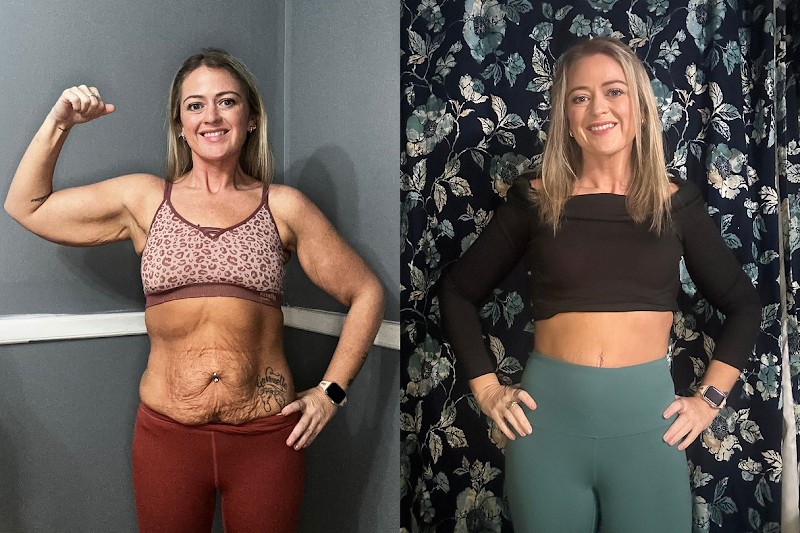
Losing a significant amount of weight is a real achievement, and it can leave skin that has not tightened to match your new shape. For many people, loose skin after weight loss becomes the next concern to address, whether it sits around the abdomen, arms, thighs or neck. This guide explains how loose skin develops, what treatments exist from non-surgical tightening through to surgery, and how doctors at McKeown Medical decide what suits each person.

Why Skin Stays Loose After Weight Loss
Skin is elastic, but only up to a point. When it has been stretched over a long period, its collagen and elastin may not recoil fully as the body beneath it shrinks. How much it retracts depends on factors including how long the weight was carried, how much was lost and how quickly, your age, genetics and sun exposure. Weight fluctuation is listed by the clinic as one of the causes of skin laxity, alongside ageing, sun exposure, hormonal change and genetics.
This is why two people who lose similar amounts of weight can end up with very different results. It also explains why there is no single treatment that suits everyone, and why an assessment of your own skin matters more than any general advice.
A Medical Assessment Comes First
A doctor will look at the area you are concerned about, assess the thickness and quality of the skin, and judge how much of the problem is loose skin, how much is remaining fat, and whether deeper structures such as the abdominal muscles are involved. The clinic notes that the right technology depends on the thickness, texture and needs of the skin in each region, and that suitability is assessed at consultation after a full medical assessment and skin analysis.
McKeown Medical was founded by Dr Darren McKeown (GMC 6128508), who graduated MB ChB from the University of Glasgow in 2005 and has 19 years of clinical practice. The clinic’s consultant plastic surgeon for breast and body procedures is Dr Kavita Sharma (GMC 7039911), whose expertise includes body contouring. Having both non-surgical and surgical expertise in one place means the recommendation can follow the clinical picture and not the other way round.
Non-Surgical Skin Tightening
For mild to moderate laxity, non-surgical treatments aim to stimulate collagen so that skin becomes firmer over time. The clinic’s skin tightening range includes several technologies, and each works differently.
Sofwave
Sofwave uses ultrasound to stimulate collagen deep within the skin, aiming to lift and tighten without damaging the fat beneath. It is described as suitable for lifting and collagen stimulation with minimal downtime.
Morpheus8
Morpheus8 combines radiofrequency with microneedling to remodel deeper tissue, improving firmness, contour and texture together. It is particularly relevant where tightening and texture refinement are both wanted.
BBL SkinTyte
BBL SkinTyte is a gentler infrared treatment that stimulates collagen renewal for gradual firming with minimal downtime, and it suits patients looking for gradual tightening and ongoing maintenance.
Most of these treatments involve little to no downtime, with mild redness or swelling that settles quickly, and most patients return to normal activities the same day. Results develop over weeks and months as collagen rebuilds. Some patients see good results after one session, while others benefit from a course, and periodic maintenance may be recommended.
Quantum RF Skin Tightening
For loose skin that needs more than a surface treatment, McKeown Medical offers Quantum RF. It is a radiofrequency-assisted skin tightening and body contouring treatment in which a specialised probe is placed beneath the skin through tiny access points. Controlled radiofrequency energy heats the connective tissue and collagen, producing immediate collagen contraction and longer-term remodelling, with tissue temperature monitored continuously throughout.
The clinic lists post-weight loss looseness as a suitable concern, along with loose abdominal skin and waist contour, soft tissue laxity in the arms, inner and outer thigh laxity, and early jowls, loose neck skin and fullness beneath the chin. For some patients it may be a minimally invasive alternative to more extensive surgery such as a tummy tuck, and for the arms it can be an alternative to an arm lift that avoids a long scar.
On Its Own or With Liposuction
Quantum RF can be used on its own where there is loose skin and relatively little excess fat, including mild to moderate laxity and areas where surgical excision may not yet be necessary. Where stubborn fat sits alongside the loose skin, it can be combined with ultrasound assisted liposuction, which softens fat before removal, and power assisted liposuction, which uses rapid micro-vibrations for precise extraction. This removes fat and tightens skin in the same session.
Anaesthesia and Recovery
Small areas can be treated under local anaesthetic. Larger areas are treated under IV sedation given by a consultant anaesthetist, with continuous monitoring, so that patients sleep comfortably and wake quickly. Treatment time ranges from around 30 minutes to four hours depending on the areas involved, and downtime ranges from two days to two weeks. Swelling and bruising last for one to two weeks, compression garments are worn for several weeks, and tightening keeps improving as collagen remodels, often over three to six months.
When Surgery Is the Right Conversation
Non-surgical methods have limits. Where there is a large amount of excess skin, significant separation of the abdominal muscles or large overhanging folds, tightening devices are unlikely to give the result a patient is hoping for, and a surgical procedure such as a tummy tuck may be the more appropriate option. The clinic is clear that Quantum RF can be an alternative to a tummy tuck for some patients but not all.
Surgery involves a scar, a longer recovery and a decision that should not be rushed. If your assessment points that way, a surgeon will explain the options, the trade-offs and what recovery would involve, and you will have time to decide. The same applies to other areas. A surgical arm lift (brachioplasty) is available at the clinic where more skin needs to be removed than Quantum RF can address.
Timing Matters
Further weight change can alter the result of any body contouring treatment, so timing is worth discussing. The clinic’s own guidance for abdominal treatments describes suitable candidates as typically near their ideal weight and looking to improve contour, not to lose significant weight. If you are still losing weight, raise this at your consultation.
What It Costs
Prices depend on the area, the technology and whether treatments are combined, and exact figures are confirmed after consultation and examination. At the clinic, Quantum RF without liposuction starts from £4,000, abdominal contouring from £5,500, upper arm contouring from £5,500 and inner thigh contouring from £5,500. Quotes can differ from website figures because plans are tailored, so ask for a full written breakdown before agreeing to anything.
Questions to Ask at Your Consultation
These questions help you get a clear picture.
- How much of my concern is loose skin and how much is fat?
- Would non-surgical tightening make a meaningful difference in my case?
- Is surgery likely to be needed, and if so, what would it involve?
- How should I time treatment around my weight?
- What are the full costs and the recovery for each option?
Recognition in Context
Dr McKeown is a Full Member of the British College of Aesthetic Medicine and a peer-reviewed medical author. Dr McKeown has been recognised in the Tatler Cosmetic Surgery Guide and the Hello! Aesthetics Guide, and the clinic took part in the BBC One documentary Facelifts & Fillers. McKeown Medical is registered with Healthcare Improvement Scotland. Read these alongside, and not in place of, a check of qualifications and an honest consultation.
A Realistic Way Forward
Loose skin after weight loss is common, medically understood and treatable, though the right treatment varies a great deal from person to person. Start with an honest assessment, be wary of anyone who promises the same result for every body, and give yourself time to weigh the options. A good plan respects both what your skin can do and what you hope to achieve.

Terry Clark is the Publisher and Content Director of 365 Retail, with more than a decade of experience covering retail design, technology innovations, store openings and the wider retail industry. He also works closely with leading retailers, suppliers, agencies, events and industry awards across the UK.