







Lighting shapes where shoppers walk, what they notice and how long they stay. Getting it right takes more than adding extra fittings.
1. Make the most of natural daylight
Begin by walking the store at different times of day, noting where daylight reaches and where it fades. Deep floor plates, back-of-store displays and stockrooms often rely entirely on artificial light. Bringing daylight into these areas can make them feel more open and inviting. Depending on the building and roof configuration, rooflights or Velux windows for bringing daylight into darker retail areas can reach spaces that façade glazing cannot. More is not always better, though. Strong sun can fade packaging, cause reflections on glass cabinets and make browsing uncomfortable. Blinds, tinted glazing or sensible screening keep daylight useful instead of overwhelming.

2. Use layers of light to make products stand out
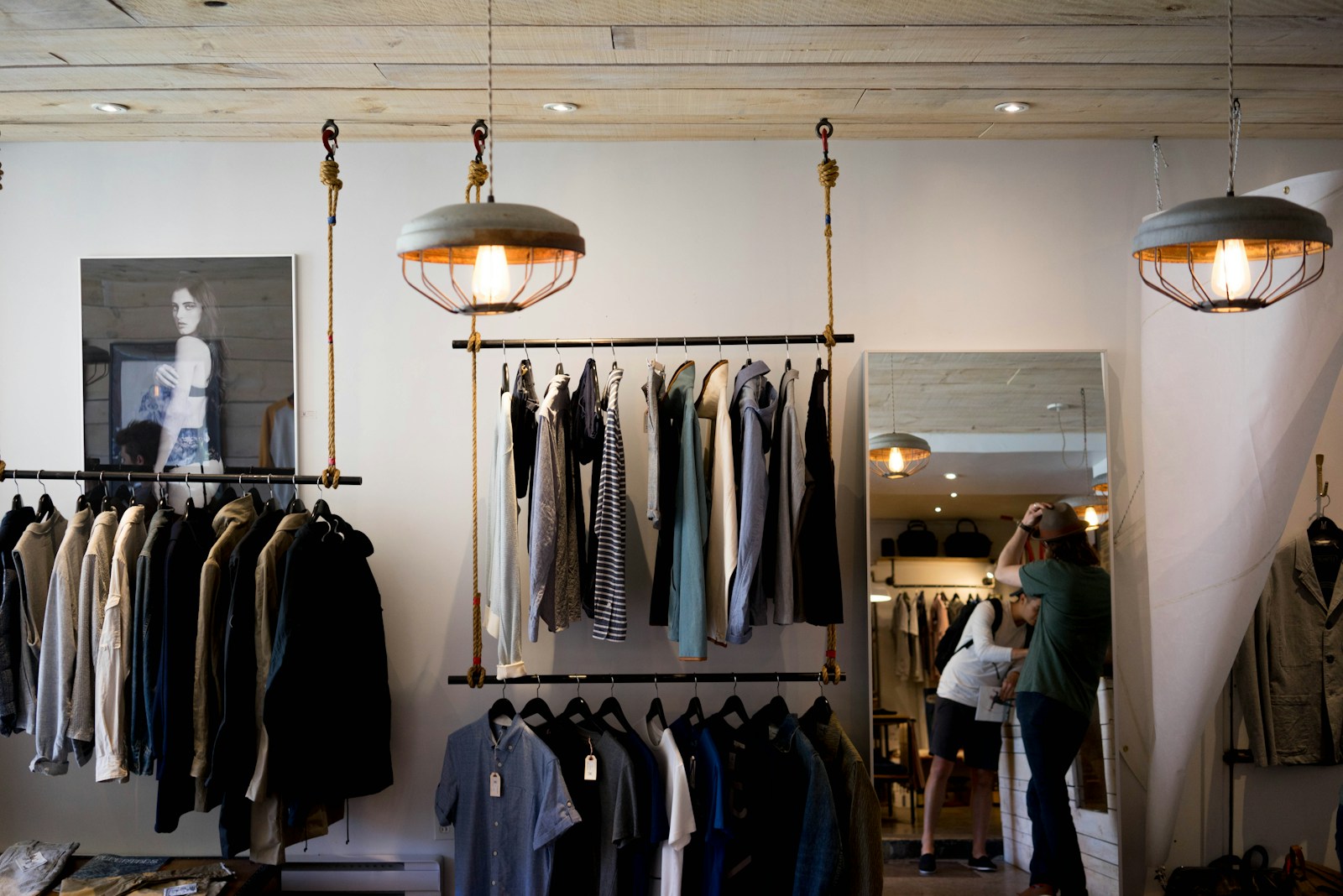
Effective retail lighting works in layers, each with its own job. Ambient lighting provides the general illumination that lets customers navigate safely. Accent lighting draws the eye to key merchandise, such as new arrivals or promotions. Task lighting supports places where people need to see detail, including counters, fitting rooms and checkouts. Combined, the layers create depth and hierarchy. A flat, uniform wash makes everything look equally important, which usually means nothing stands out.
3. Think about light quality, not simply brightness
Brightness tells only part of the story. Colour rendering describes how faithfully light shows an object’s true colours, and accurate colour rendering helps shoppers buy with confidence and may reduce colour-related returns. It matters most wherever customers judge fabric, make-up or fresh food. Contrast between displays and their surroundings guides attention, while glare from spotlights on shiny surfaces tires the eye. Different areas also need different treatment. The shop floor, fitting rooms and stockroom each have their own demands, so one setting rarely suits every activity.
4. Create an efficient lighting plan
A good scheme should also be affordable to run. Switching to energy-efficient lights such as LEDs can make immediate savings of up to 75% and zone controls, passive infrared sensors and daylight sensors can make it so that lights only come on when they are needed. LEDs are the obvious starting point, but controls build on that saving. Daylight sensors dim fittings when natural light is plentiful, occupancy sensors suit stockrooms and back-of-house corridors, and zoning lets staff adjust each area separately. In a refurbishment, weigh efficiency alongside visual quality from the outset so that a cheaper-to-run scheme still shows your products at their best.
The best retail lighting blends daylight with layered artificial light, matches quality to each activity and keeps running costs down. Plan these together, and your space will look better and cost less to light.

Terry Clark is the Publisher and Content Director of 365 Retail, with more than a decade of experience covering retail design, technology innovations, store openings and the wider retail industry. He also works closely with leading retailers, suppliers, agencies, events and industry awards across the UK.