











It’s the Saturday before the holidays. Footfall is at its peak, the tills haven’t stopped, and the queue for the fitting rooms snakes past the jewellery counter. Half the shop floor is seasonal staff who started three weeks ago. Then a shopper in the checkout line goes pale, sways and drops. Who on the rota today actually knows what to do? For many operators, the honest answer is “not sure.” That’s the gap that programmes like Coast2Coast First Aid Training Mississauga are built to close before the rush, not after it.
Retail plans peak trading down to the last pallet. Stock levels, staffing levels, promo calendars and loss prevention all get forensic attention. Emergency response rarely does. And yet peak is exactly when the risk climbs, because more people, more pressure and less experience are all packed into the same few weeks.

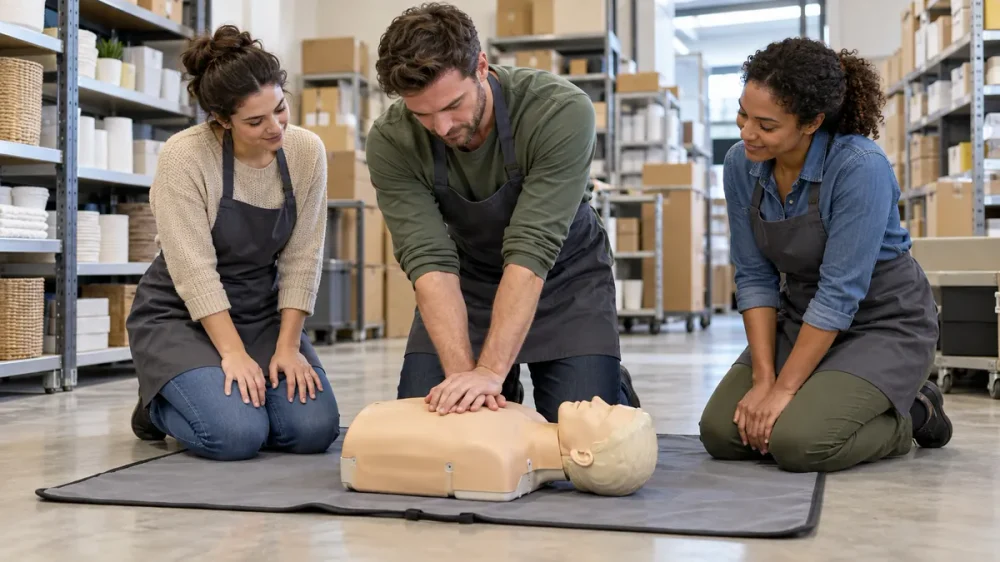
This piece looks at why the safety gap opens up during peak, what can go wrong on a busy shop floor, and the practical fixes any retailer can apply. We’ll use one example market to ground it: the dense retail cluster around Square One in Mississauga, Ontario, where the rules are clear and the crowds are real.
Why Does Peak Season Create a Safety Gap?
Peak trading changes the make-up of the store. Three things happen at once.
Footfall surges. More customers means more chances for something to go wrong. A store that sees a few medical incidents a year might see several in a single December.
The workforce shifts. Seasonal temps fill the gaps, and most of them haven’t had first aid training. They’re hired for speed on the tills and the stockroom, and their onboarding is mostly about systems, not emergencies.
The rota gets thin in strange places. Your trained supervisor might be on break, on the other side of the building, or off for the weekend. Long trading hours stretch coverage across more shifts, and nobody checks whether each shift has someone qualified.
Put those together and you get a familiar picture. The busiest day of the year is also the day with the lowest share of trained staff on the floor.
What Emergencies Actually Happen on a Busy Shop Floor?
Most retail emergencies aren’t dramatic. Some are. All of them are more likely when the store is packed.
- Fainting in queues. Heat, long waits, heavy coats and skipped meals add up. Customers collapse in checkout lines more often than you’d think.
- Slips, trips and falls. Wet entrances, dropped stock and crowded aisles cause sprains, head knocks and broken wrists.
- Choking in food courts. Busy eating areas and distracted diners create real choking risk, for both kids and adults.
- Cardiac arrest. It can happen to anyone, at any age, in any store. A crowded mall is no exception.
- Stockroom and ladder injuries. Staff rushing to restock climb ladders they shouldn’t, lift boxes that are too heavy, and catch hands on cages and roll containers.
- Cuts and allergic reactions. Box cutters, broken glass and sample stations all play a part.
Some of these need plaster and a calm word. Others need someone to start chest compressions within a minute. Your team should know the difference.
Why Do the First Few Minutes Matter So Much?
Paramedics are fast, but a big shopping centre slows them down. They have to park, find the right entrance, get through the crowd and reach the right unit. That can take a while.
For cardiac arrest, the numbers are blunt. According to the Heart and Stroke Foundation, an estimated 60,000 out-of-hospital cardiac arrests happen in Canada every year, and only about one in 10 people survive. Doing CPR and using an AED can double a person’s chance of survival. Every minute without CPR or defibrillation, survival drops by about 10 per cent.
So the real question isn’t whether help is coming. It’s who keeps that person alive until it arrives. In a packed store, that’s your staff. Or it’s nobody.
What Does Ontario Require From Retailers?
In Ontario, where the Square One-area stores trade, employers covered by the WSIB must follow Regulation 1101. The core rule is tied to shift size:
- Five or fewer workers on a shift: at least one worker with Basic First Aid
- Six or more workers on a shift: at least one worker with Intermediate First Aid
The regulation also requires a first aid station with a stocked kit, the names and certificates of trained workers posted nearby, and the WSIB “In Case of Injury at Work” poster (Form 82). Certificates are valid for three years.
There’s a recent wrinkle worth knowing. In June 2026, Ontario aligned its course names with the national standard CSA Z1210:24. Emergency First Aid became Basic First Aid, and Standard First Aid became Intermediate First Aid. The thresholds didn’t change. On top of that, Ontario’s Occupational Health and Safety Act expects employers to take every reasonable precaution to protect workers.
Here’s the catch for retail. The rule applies per shift. A store that’s compliant on a quiet Tuesday can fall out of compliance on a peak Saturday, simply because the trained person isn’t on that day. Your regulations may differ, but the lesson travels well: coverage is a rota problem, not a training-records problem.
How Do You Close the Gap Before Peak Hits?
The fix isn’t complicated. It just needs to happen in October, not December.
Map Trained Staff Onto the Rota
Pull your training records and overlay them on the peak rota. Flag every shift, and every break window, without a qualified first aider on the floor. Then fix it, either by moving shifts or by training more people. Treat it like a staffing gap, because that’s what it is.
Train Before the Rush
Book courses for permanent staff and key supervisors well ahead of peak. Many providers offer blended learning, with theory online and a shorter in-class session for hands-on skills like compressions and AED use. That makes it easier to fit training around trading hours. Ideally, every department or zone has at least one trained person on every shift.
Know Where the AED Is
If your store or centre has an AED, every person on the rota should know where it is and how to get to it fast. If you share a mall’s AED, find out exactly where it sits and who can access it. Walk the route. Time it. A defibrillator nobody can find isn’t doing anyone any good.
Write a 60-Second Plan
Your emergency plan should fit on one page and work in the first minute:
- Who responds. The nearest trained person goes to the casualty.
- Who calls 911. Name a person and a backup for every shift.
- Who fetches the AED and kit. One person, one job.
- Who meets the paramedics. In a big centre, someone needs to guide them in from the right entrance.
- Who manages the crowd? Clear space, keep customers back, protect the person’s dignity.
Brief Your Seasonal Hires
You may not be able to fully train every temp. You can still brief them. A five-minute talk on day one covers a lot: where the kit and AED are, who the trained staff are, how to call for help on the radio, and how to call 911 with the store’s address. Hands-only CPR is an option for untrained bystanders, so it’s worth showing them the basics: push hard and fast in the centre of the chest, at a rate of 100 to 120 compressions per minute.
What Mistakes Do Retailers Make Most Often?
Most gaps aren’t caused by neglect. They’re caused by assumptions.
- Assuming one trained manager covers everyone. Managers take breaks and days off too.
- Letting certificates lapse. A three-year renewal is easy to miss without a reminder.
- Training only head office or management. The shop floor is where things happen.
- Ignoring the stockroom. Back-of-house injuries are common during restocking pushes.
- Skipping drills. Without practice, even trained staff can freeze in a crowded store.
How Do You Keep the Plan Working All Year?
Peak is the stress test, but the plan has to hold in every season. Run a short drill once a quarter: a customer collapses at the tills. Who goes? Who calls? Who brings the AED? Ten minutes is enough to keep it sharp.
Build renewals into your planning calendar alongside stocktakes and promo launches. When you’re sourcing training for the next round, providers such as Coast2Coast First Aid & Aquatics can schedule group sessions around trading hours, which matters when every staffed hour counts.
And measure it. Track the share of shifts with a trained first aider, the same way you track conversion or average transaction value. What gets measured gets fixed.
The Bottom Line for Retail Operators
Retail has always been good at planning for crowds. The next step is planning for what happens when someone in that crowd goes down. The busiest weekend of the year shouldn’t be the one with the fewest trained hands. Close the gap now, while there’s still time to train before the doors open on peak.
If you are looking for first aid and CPR training near King Street and Hurontario Street, the Square One area, or surrounding areas, you may reach out to Coast2Coast First Aid & Aquatics in that area.
Frequently Asked Questions
Q: Why is peak season riskier for retail safety?
A: Footfall rises, seasonal staff join with little or no first aid training, and long trading hours stretch trained staff across more shifts. That combination often leaves the busiest days with the fewest qualified responders on the floor.
Q: How many first aiders does an Ontario store need?
A: Under WSIB Regulation 1101, a shift with five or fewer workers needs at least one person with Basic First Aid. A shift with six or more workers needs at least one person with Intermediate First Aid. The rule applies to each shift, so peak rotas need checking.
Q: Do seasonal staff need first aid training?
A: Not every temp needs a full course, but every shift needs enough trained staff to meet the rules. All seasonal hires should get a short briefing on where the kit and AED are, who the trained staff are, and how to call 911.
Q: What should a retail emergency plan include?
A: Keep it to one page. Name who responds, who calls 911, who brings the AED and first aid kit, who meets paramedics at the entrance, and who manages the crowd. Post it and walk new hires through it.
Q: How long are first aid certificates valid in Ontario?
A: Workplace first aid and CPR certificates are valid for three years. Many retailers also run short quarterly drills so skills stay fresh between renewals.

Terry Clark is the Publisher and Content Director of 365 Retail, with more than a decade of experience covering retail design, technology innovations, store openings and the wider retail industry. He also works closely with leading retailers, suppliers, agencies, events and industry awards across the UK.