











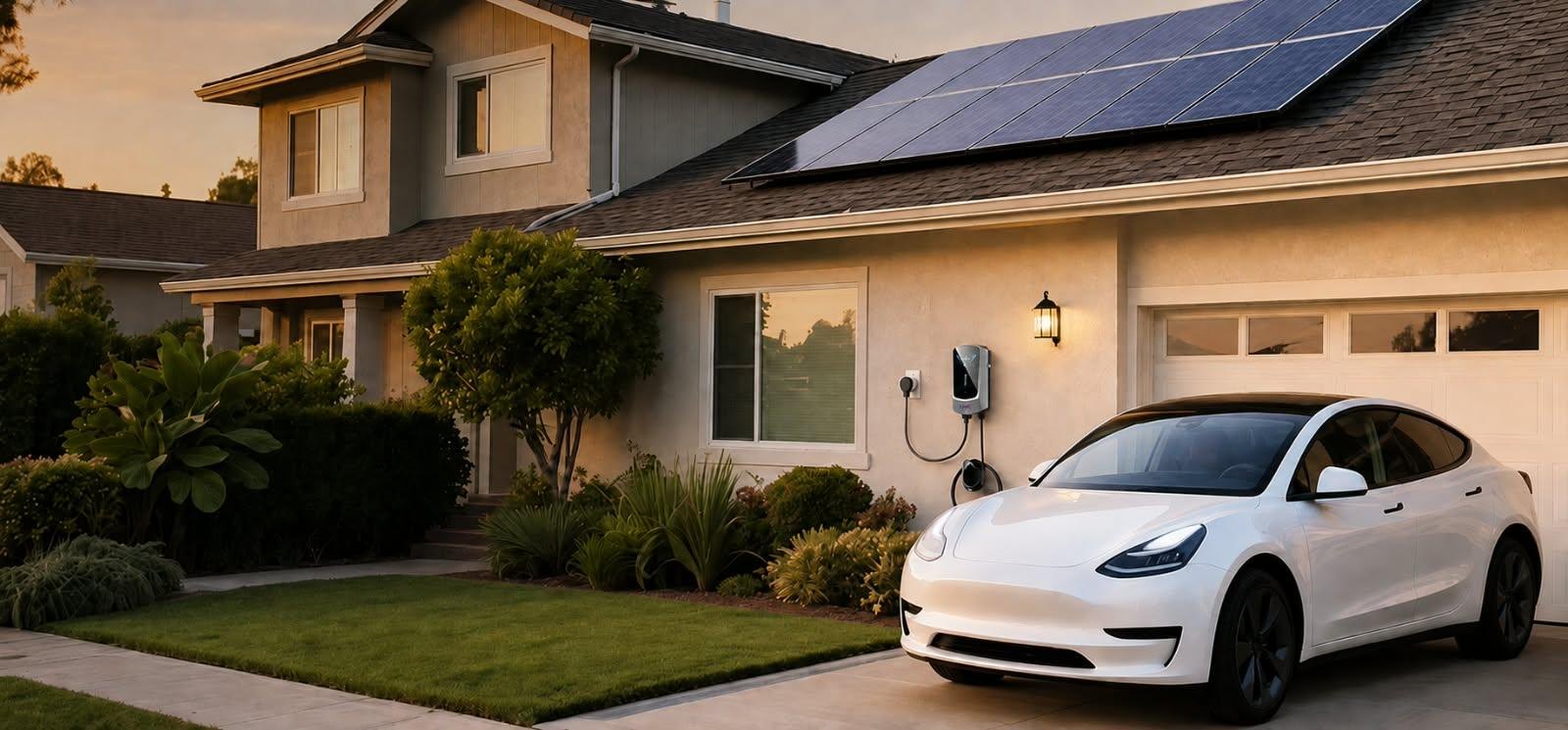
Charging an electric vehicle at home is already convenient, but it can become even more efficient when solar power and smart energy management work together. Instead of simply plugging in whenever the car is parked, homeowners can think about when and how electricity is being used. QIAO Charger offers EV charging solutions that can fit into this growing approach to smarter home charging.
Solar panels can generate electricity during the day, while an EV may need to charge at different times. Intelligent load balancing can help manage this difference by adjusting how available electrical power is shared between the vehicle and other appliances in the home.

The result is a more thoughtful way to charge without putting unnecessary pressure on the home’s electrical system.
Why Combine Solar Power With EV Charging?
Solar panels produce electricity from sunlight, making daytime an important period for solar generation. However, many EV owners return home later in the day, after much of the strongest sunlight has passed.
This creates a simple challenge. The home may produce plenty of solar energy when the car is away, but the vehicle may need charging when household electricity demand is already increasing.
Smart charging can help bridge this gap. When the right system is available, charging can be scheduled or adjusted around energy production and household demand.
For homeowners with solar panels, this can make the EV part of a wider home energy strategy rather than treating it as a separate electrical load.
What Is Intelligent Load Balancing?
Load balancing is about managing how much electricity different devices use at the same time.
A home may have several electrical demands running together. An oven could be operating while an air conditioner is running, appliances are being used, and the EV is connected to a charger. If all of these systems draw significant power at once, the home’s electrical capacity can become an important consideration.
Intelligent load balancing helps manage this situation by monitoring or responding to available electrical capacity. Instead of allowing EV charging to compete unnecessarily with other major loads, the charging power can be adjusted based on the situation.
This makes home EV charging more adaptable.
Making Better Use of Solar Energy
Solar power and load balancing can complement each other particularly well.
Imagine a home where solar panels are producing strong electricity during the afternoon. If the EV is connected and the charging system can make use of available solar generation, more of the vehicle’s charging demand can potentially be aligned with that production.
Later, when the sun goes down and household electricity use increases, charging can be reduced, paused, or managed according to the system’s capabilities and settings.
This approach is not simply about charging faster. It is about charging at a more suitable time.
Choosing the Right Home EV Charger
The charger is an important part of this setup. A home EV charger should match the vehicle, electrical installation, and the homeowner’s charging habits.
When choosing a charger for a solar-powered home, it is useful to consider:
- Charging power: Understand how much power the charger can provide.
- Electrical compatibility: Make sure the charger works with the home’s electrical setup and EV.
- Load management: Check whether the system supports suitable load-balancing functions.
- Smart controls: Look for useful scheduling or monitoring features when needed.
- Installation: Have the electrical requirements assessed by a qualified professional.
The best setup is not necessarily the one with the highest charging output. It is the one that works comfortably with the home’s energy system.
Balancing the Home’s Energy Needs
One of the biggest advantages of intelligent load balancing is that EV charging does not have to operate independently from the rest of the home.
Household energy needs change throughout the day. A family may use more electricity in the morning, less during working hours, and more again in the evening. Solar production follows a different pattern, usually reaching its strongest levels during daylight hours.
Smart energy management can help respond to these changing conditions. EV charging can become part of the overall energy picture instead of being treated as a constant demand.
This can be especially useful for homes with several large electrical appliances.
A More Flexible Charging Routine
Solar charging does not have to mean that the vehicle is charged only when the sun is shining. Grid electricity can still be part of the overall system when necessary.
The advantage of combining solar power with intelligent controls is flexibility. Homeowners can use available solar energy when conditions are suitable while still having access to other electricity sources when more charging is needed.
This can make the charging routine easier to manage. Instead of manually checking energy production throughout the day, homeowners can rely on the capabilities of their charging and energy-management setup.
Why Smart Charging Is Becoming More Important
As more households adopt EVs and renewable energy, the relationship between transportation and home electricity is becoming closer. An EV is no longer simply a vehicle that needs to be charged. Its battery can become another part of the household’s energy system.
That makes smart charging increasingly valuable. Solar panels can generate electricity, household appliances consume it, and the EV adds another major electrical demand. Intelligent load balancing helps these different needs work together more effectively.
It is a practical step toward making home energy use more organized.
Final Thoughts
Solar power and intelligent load balancing can make home EV charging more efficient, flexible, and easier to manage. Solar panels provide an opportunity to use renewable electricity, while load balancing helps control how charging fits alongside the home’s other electrical needs.
The right home EV charger can connect these pieces into a more practical charging routine. Instead of simply asking how quickly an EV can charge, homeowners can also consider when charging should happen and how it fits into their wider energy use.
For EV owners with solar panels, this smarter approach can turn home charging into a more integrated part of everyday energy management.

Terry Clark is the Publisher and Content Director of 365 Retail, with more than a decade of experience covering retail design, technology innovations, store openings and the wider retail industry. He also works closely with leading retailers, suppliers, agencies, events and industry awards across the UK.