











Amazon’s decision to close all of its Fresh physical stores in the UK has stirred conversation across the grocery sector, raising questions about the viability of checkout‑free models and the future role of artificial intelligence in bricks-and-mortar retail.
The move comes after the company confirmed it would shutter all 19 Amazon Fresh locations and redirect focus towards online grocery growth, citing “substantial growth opportunities in online delivery”. Five of the sites are expected to be converted into Whole Foods Market outlets, further distancing Amazon from its original autonomous store strategy.
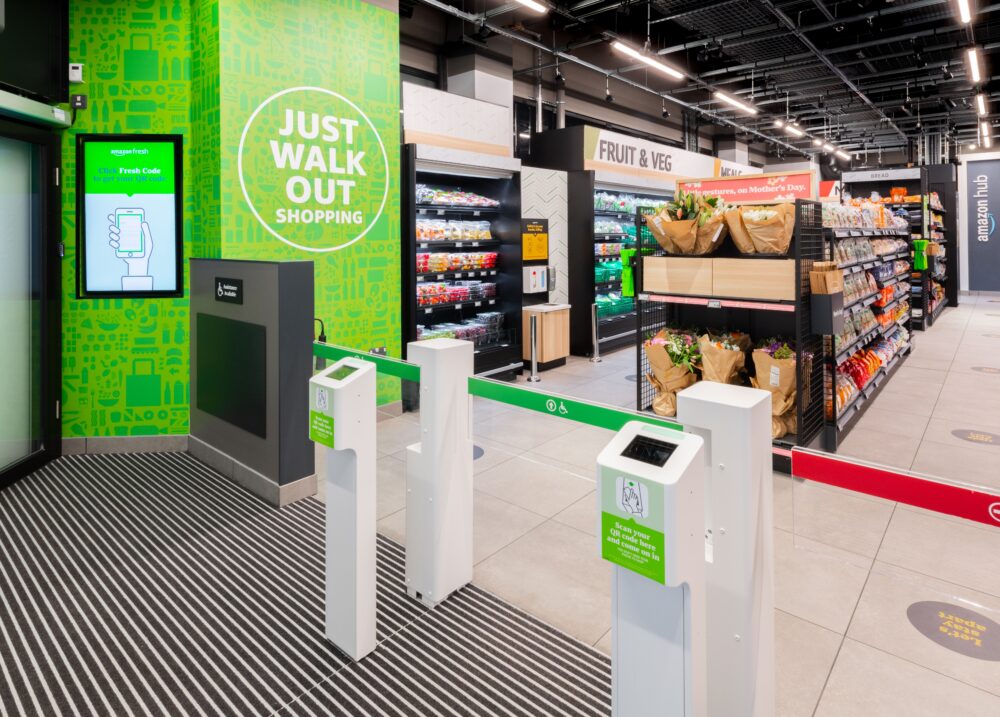
Complexity Behind the Frictionless Promise
At the heart of the Amazon Fresh concept was its “Just Walk Out” technology, designed to eliminate queues by automating checkout. But the technology struggled under real-world conditions, leading to billing errors, missed items, and increased operational overhead.
Chris Jones, Managing Director at PSE Consulting, said the vision was compelling but ultimately fell short in execution:
“While the Just Walk Out concept promised a frictionless shopping experience, the reality proved far more complex. Errors such as mischarges, missed items, and other operational challenges eroded customer trust, requiring a significant back-office workforce and undermining the model’s scalability.”
“For UK shoppers, already familiar with self-scan and click-and-collect, the benefit wasn’t compelling enough to change established habits.”
A Tough Environment for Lab-Built Tech
The closure underscores the risks associated with bringing emerging technologies into the unpredictable dynamics of in-person retail. While AI-driven systems often perform well in controlled testing environments, real-world grocery operations are far messier.
“The technology itself was both pioneering and problematic,” said Jones. “It highlighted the difficulties of taking lab-tested payments solutions into the messy, unpredictable environment of a grocery store. Unlike eCommerce, where testing and iteration are low-cost, in-store experimentation is expensive and operationally complex.”
This echoes commentary that the grocery technology behind autonomous checkout solutions often encounters scalability issues once deployed beyond trial environments.
From Closure to Data Capitalisation
While the physical stores are closing, Amazon’s data ambitions are growing. Through its Fresh operations, the company has accumulated billions of behavioural datapoints, from shopping routes to decision-making patterns at the shelf.
“The stores have generated a uniquely rich dataset: billions of behavioural insights into how people shop. This data can now be used to train GenAI models and test future in-store technologies, including innovations like the Dash Cart, at a fraction of the cost competitors would face.”
Amazon has signalled it will continue to license its autonomous checkout system to third-party retailers and venues, while applying its in-house learnings to the next generation of AI-driven retail systems.
Future Formats, Evolving Strategies
Amazon’s strategy shift also reflects broader changes in the retail landscape, where brands are increasingly investing in fulfilment infrastructure, data-driven store formats, and digital-first customer experiences.
“The move also reflects broader grocery sector trends,” Jones added. “Online delivery and click-and-collect are areas of growth, but in-store models drive customer engagement and loyalty. Grocers continue to invest in supply chain efficiency and last-mile delivery while experimenting with new in-store formats.”
“The smarter approach is to leverage data-driven digital simulations before scaling. Learning from consumer behaviour and edge cases ensures new in-store technologies truly enhance, rather than frustrate, the shopping experience.”

A Digital Testbed for Future Retail
Amazon’s UK Fresh project may have ended without achieving its initial goals, but the company is positioning itself to lead in the next stage of AI retail. The lessons learned from this rollout, and the data-driven strategies it enabled, are expected to inform how future stores are designed, operated, and optimised.
“Despite these setbacks, Amazon’s pivot is not a retreat but a recalibration,” Jones concluded. “In this sense, the in-store experiment has created a digital testbed for the next generation of AI-driven retail experiences.”
With no immediate plans to return to the UK high street, Amazon’s long game may involve stepping back in – but only once the digital groundwork has been fully laid.

Terry Clark is the Publisher and Content Director of 365 Retail, with more than a decade of experience covering retail design, technology innovations, store openings and the wider retail industry. He also works closely with leading retailers, suppliers, agencies, events and industry awards across the UK.