









While contactless cards and digital wallets grab most of the headlines for retail payments, a different option is steadily gaining ground: instant bank transfers. This shift represents a fundamental change in how we think about retail transactions, where speed, security, and consumer trust have become the driving forces.
For decades, the payment ecosystem seemed relatively settled. Cards dominated in-store purchases, whilst online shopping relied heavily on entering lengthy card details at checkout. But consumer expectations have changed dramatically. Today’s shoppers demand transactions that are not only fast and secure, but also transparent and cost-effective. Instant bank transfers, are emerging as the payment method that ticks all these boxes.

This transformation is far from fully complete, but the signs are unmistakable. Forward-thinking retailers are beginning to recognise that instant banking payments represent a significant opportunity and could reshape their bottom line whilst improving the customer experience.
Open Banking Has Changed the Game
The bank transfers of today bear little resemblance to the sluggish processes many people remember from years past. Thanks to Open Banking technology, modern transfers between two UK banks happen in real-time, transforming what was once a cumbersome payment method into something streamlined.
Here’s how it works:
- A customer chooses to pay by bank transfer at checkout
- They’re securely connected through their app or online banking platform
- They confirm the payment amount and authorise the transaction
- The money moves instantly from their account to the retailer’s
- Both parties receive immediate confirmation
The security advantages are substantial. Unlike card payments, customers don’t need to share sensitive financial details with the retailer. Instead, the transaction happens within their bank’s own secure environment, protected by the same robust authentication measures they use for all their banking activities. This might include fingerprint recognition, facial ID, or secure passwords.
From the customer’s perspective, this represents a significant improvement in the shopping experience. There’s no need to type in long card numbers, expiry dates, or security codes. There’s no worry about the card being declined, and no concern about sharing financial information with yet another online retailer. Many customers find this approach more trustworthy because they’re dealing directly with their own bank. This growing consumer comfort is becoming a key driver in the adoption of these payments across retail sectors.
Case Study: How Instant Bank Transfers Changed the Gambling Industry
In terms of impact, one of the most interesting cases of instant banking transforming an industry is gambling. The online casino sector provides a fascinating example of how payment preferences can shift dramatically when the right technology meets consumer demand. Banktransfercasino.co.uk, an expert in analysing online casinos that use bank transfer in the UK, has conducted research demonstrating this effect via Google Trends.
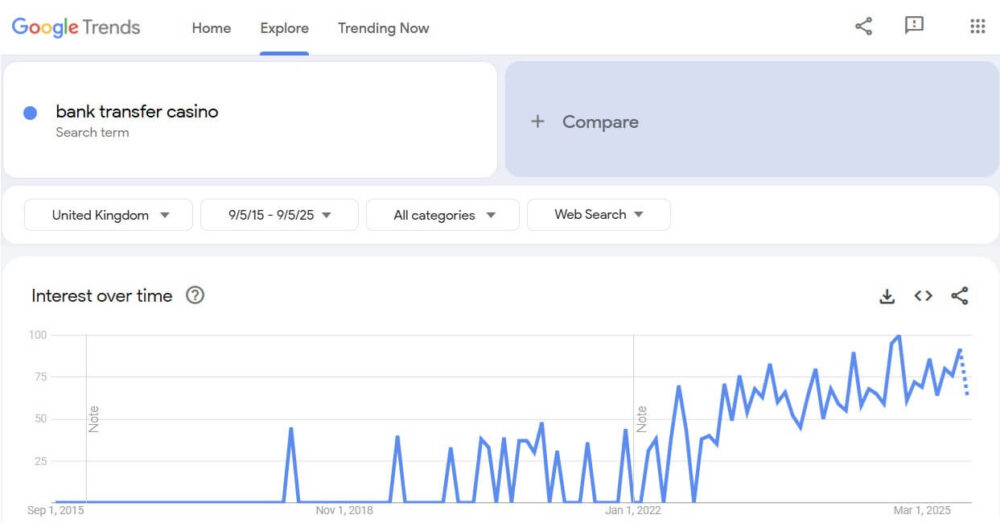
As shown above, the data across the past 10 years reveals a sharp increase in people from the UK interested in searching for “bank transfer casino” within the past few years. That interest has been sustained too, steadily growing over this short timeframe. This upward trajectory clearly shows a major shift in bank transfer’s reputation with players compared with previous years.
Historically, it was the payment method that players avoided the most. They were slow, often taking several days to process, and created frustration for users who wanted immediate access to their funds. Instead, the gambling industry offered alternatives in the form of card payments and e-wallets.
However, the arrival of services like Trustly completely transformed this dynamic. Suddenly, bank transfers became fast, reliable, and convenient. Players could deposit funds immediately and receive their winnings quickly, all whilst maintaining the security and transparency of dealing directly with their bank. Today, many UK players actively choose instant banking as their primary payment method, representing a complete reversal from just a few years ago.
Benefits for Retailers
The advantages of instant banking transfers extend far beyond customer convenience, offering retailers a variety of financial and operational benefits that are difficult to ignore.
- Lower transaction fees represent the most immediate attraction. Transfers between bank accounts are generally much cheaper, as they bypass card networks and avoid the associated fees. For retailers operating on thin margins, this cost saving can make a meaningful difference to their bottom line, particularly for higher-value transactions where card fees become more substantial.
- Checkout friction is significantly reduced when customers can pay directly in just a few clicks. There’s no chance for customers to enter details incorrectly or any other mishaps. This smoother experience can reduce basket abandonment rates and improve overall customer satisfaction.
- Cash flow is also improved. Whilst card payments can take several days to settle, funds are delivered to bank accounts much more quickly. This improved liquidity helps retailers manage their working capital more effectively, particularly important for smaller businesses that rely on steady cash flow to meet their obligations.
Aside from logistical advantages, having these payments can help to build customer loyalty. When transactions are smooth, secure, and transparent, customers develop greater trust in the retailer. This often translates into repeat business and positive recommendations or online reviews.
Room for More Expansion
Despite these compelling advantages, paying with bank transfer remains relatively underdeveloped in retail. PwC, one of the UK’s biggest accountancy firms, conducted an analysis which suggests that account-to-account (A2A) payments are still in their infancy within the retail sector, despite their strong potential for growth. Current adoption levels represent just the beginning of what could be a much larger transformation.
While millions of consumers already use instant bank transfers in various contexts, there’s enormous room for further penetration as more retailers implement and actively promote these payment options. Early adopters have the opportunity to differentiate themselves while building customer loyalty around a superior payment experience.
Case Study: How VRP Could Be the Future of Recurring Payments
Looking ahead, Variable Recurring Payments (VRP) could revolutionise how we handle subscription services, membership fees, and regular retail purchases. VRP would allow customers to set up recurring payments directly from their bank account, managed through their own banking platform rather than traditional direct debit systems. Whilst VRP isn’t yet available in the UK, regulatory signals from the Financial Conduct Authority and government suggest a positive outlook for implementation soon.
This development could accelerate adoption even further, particularly in retail sectors that rely on recurring purchases or payments. Customers would have greater control over them, whilst retailers could benefit from more reliable collection rates and reduced administrative costs.
For retailers, the message is clear: now is the time to embrace instant banking. Early adoption positions businesses as forward-thinking and customer-focussed, whilst delivering immediate benefits in a variety of ways. As consumer preferences continue to evolve towards payment methods that prioritise security, transparency, and convenience, bank transfers are increasingly well-positioned to meet these demands.
The retailers who recognise this opportunity today will be best placed to benefit as payments via instant banking continue their rise from alternative payment method to mainstream choice.