











The most valuable moment in retail is the one that happens inside the store, when a customer is already there, already holding their phone, and deciding what to put in the basket. In-store screens sit exactly in that moment, and retailers are increasingly treating them as a tool to shape decisions rather than as decoration. The retail digital signage market reflects the shift, valued at $5.89 billion in 2025 and forecast to reach $7.86 billion by 2030, according to Mordor Intelligence.
What makes a screen different from a poster is that it can respond. It changes by time of day, reacts to what is selling, and points the customer toward the next thing rather than sitting there repeating one fixed message. Used well, a screen is a silent member of staff whose only job is to answer the question every shopper is asking without saying it out loud: what to buy next.

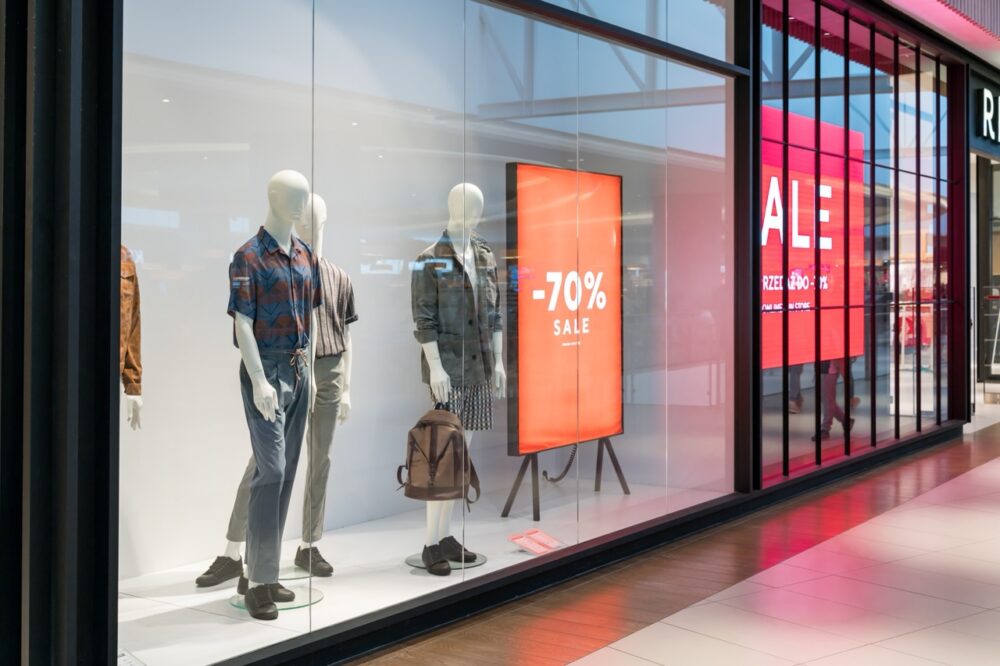
From wallpaper to a working tool
The retailers getting little from their screens tend to use them as moving wallpaper. Generic brand imagery loops on a wall, nobody looks twice, and the investment is written off as a nice-to-have. The ones getting a return use the screen to do a specific job at a specific spot in the store.
A screen near the entrance sets the offer that pulls people in. One above the counter promotes the add-on that lifts the average basket. One at the shelf edge settles a decision between two products. Each screen has a purpose tied to where it sits and what the customer is doing there, and that is the difference between a display that earns its place and one that fades into the background.
Placement is the strategy
Where a screen goes matters as much as what it shows. The high-value positions are the ones where a customer is already deciding: the entrance, the queue, the checkout, and the shelf edge beside a considered purchase. A screen in the right place lengthens the time a customer spends engaged with a product and nudges the decision while it is still being made.
Cloud-managed indoor digital signage makes it practical to run different content on each of those screens and change it as the day moves. A breakfast message becomes a lunch message becomes an evening one, automatically, without anyone touching the hardware. The screen at the counter can push a different add-on this week from last, matched to what the store is trying to shift.
The behaviour it actually changes
Screens work on the shop floor because they meet the customer at the point of decision rather than before it. A promotion a customer saw in an email last week is a memory. The same promotion on a screen beside the product is a prompt at the exact moment it can act on them, and that timing is what moves behaviour.
The effect compounds when the content is relevant. A screen showing what is popular, what is new, or what pairs well with the item in a customer’s hand does the work a good salesperson would, at every screen, all day, without tiring or forgetting. Grand View Research points to retailers seeing meaningful foot-traffic gains from well-placed displays, and the mechanism is simple: the right message, in the right place, at the right time.
The relevance also has to be maintained. A screen that showed the same three products for a month becomes invisible to the staff and the regulars alike, which is why the retailers who keep seeing a return are the ones who treat content as an ongoing task rather than a launch. They rotate the message with the season, the stock and the trading day, so the board is always saying something a customer might act on rather than something they have already learned to ignore.
Getting it right in store
The retailers who succeed with in-store screens follow a short set of habits. They give each screen a job tied to its location. They schedule content around the trading day rather than setting it once. They keep the message about the customer’s next decision, not the brand’s logo. And they change it often enough that regular shoppers keep noticing it.
None of that requires a large team or a technical specialist. It requires treating the screens as part of how the store sells, managed and reviewed like any other part of the floor. Done that way, in-store signage stops being a fixture on the wall and becomes one of the more direct tools a retailer has for shaping what ends up in the basket. The screens are already on the floor in most stores, and the gain comes from using them deliberately rather than leaving them to loop unnoticed.

Terry Clark is the Publisher and Content Director of 365 Retail, with more than a decade of experience covering retail design, technology innovations, store openings and the wider retail industry. He also works closely with leading retailers, suppliers, agencies, events and industry awards across the UK.