







The construction industry is undergoing a massive shift. For decades, building meant heavy carbon emissions, massive waste, and a reliance on finite resources. Today, the focus is entirely different. Eco-friendly design innovations are no longer just an alternative option; they are becoming the standard. Builders, architects, and developers are prioritizing sustainability to meet new regulations and satisfy a market that demands greener living spaces. This shift is reshaping how we plan, build, and interact with our environments.
Before a single brick is laid, developers need to ensure their green concepts are viable and visually appealing to stakeholders. This is where advanced planning tools become crucial. Using VisEngine Architectural Visualisation Services allow project teams to accurately model the impact of sustainable features, from natural light optimisation to the integration of renewable energy sources, ensuring the final build matches the eco-friendly intent.

So, what exactly is driving this green revolution in building? Several key innovations are leading the charge.
- Mass Timber Construction
- Biophilic Design Integration
- Smart Energy Management Systems
- Recycled and Upcycled Building Materials
- Passive House Standards
Let’s explore how these concepts are changing the physical landscape of our cities and towns.
Zero net energy building systems. Source: AdazhiyDmytro / Getty Images
The Rise of Sustainable Materials
For a long time, concrete and steel were the undisputed kings of construction. While they are incredibly strong, their production is notoriously hard on the environment. The industry is now turning to materials that offer comparable strength without the heavy carbon footprint.
Mass Timber: Wood Makes a Comeback
Mass timber is perhaps the most exciting material innovation in recent years. Unlike standard lumber, mass timber involves pressing or nailing layers of wood together to create large, structurally robust panels and beams. Products like Cross-Laminated Timber (CLT) are strong enough to build high-rises.
The environmental benefit is twofold. First, the manufacturing process produces a fraction of the emissions associated with steel or concrete. Second, wood naturally stores carbon. A building constructed with mass timber actually acts as a carbon sink, locking away CO2 for the lifetime of the structure.
Rethinking Concrete
Concrete isn’t going away completely, but it is getting a green makeover. Researchers have developed new formulas that replace the carbon-intensive Portland cement with industrial byproducts like fly ash or slag. Even more innovative are “carbon-curing” technologies. These processes inject captured industrial carbon dioxide into the concrete mix during mixing. The CO2 reacts and becomes permanently trapped within the concrete, actually making the material stronger while reducing its climate impact.
Energy Efficiency as a Core Principle
Building a structure with green materials is only half the battle. The ongoing energy consumption of a building dictates its long-term environmental impact. Modern construction practices prioritize designs that drastically reduce the need for artificial heating and cooling.
Eco-friendly straw bale insulation. Source: NATALIA NOSOVA / Getty Images
The Passive House Approach
The Passive House standard is a rigorous set of design principles aimed at creating ultra-low energy buildings. The concept relies on creating a virtually airtight building envelope. This involves super-insulation, high-performance windows (often triple-glazed), and the elimination of thermal bridges—areas where heat easily escapes.
Because the building is sealed so tightly, it retains heat exceptionally well in the winter and stays cool in the summer. A mechanical ventilation system with heat recovery ensures a constant supply of fresh air while capturing the heat from the outgoing stale air. The result is a home or office that requires almost no active heating or cooling, drastically cutting energy bills and emissions.
Smart Systems and Renewable Integration
Technology is also playing a crucial role. Smart building management systems use sensors to monitor occupancy, temperature, and natural light levels. These systems automatically adjust lighting, HVAC, and even window blinds to optimize energy use in real-time.
Furthermore, integrating renewable energy is becoming standard practice. Solar panels are no longer bulky afterthoughts; they are being designed as integrated roofing materials. Geothermal heat pumps, which use the stable temperature of the earth to heat and cool buildings, are also seeing increased adoption, providing a highly efficient alternative to traditional HVAC systems.
Designing with Nature in Mind
Eco-friendly design isn’t just about reducing harm; it’s also about creating environments that actively improve well-being. This is where the concept of biophilic design comes into play.
Bringing the Outside In
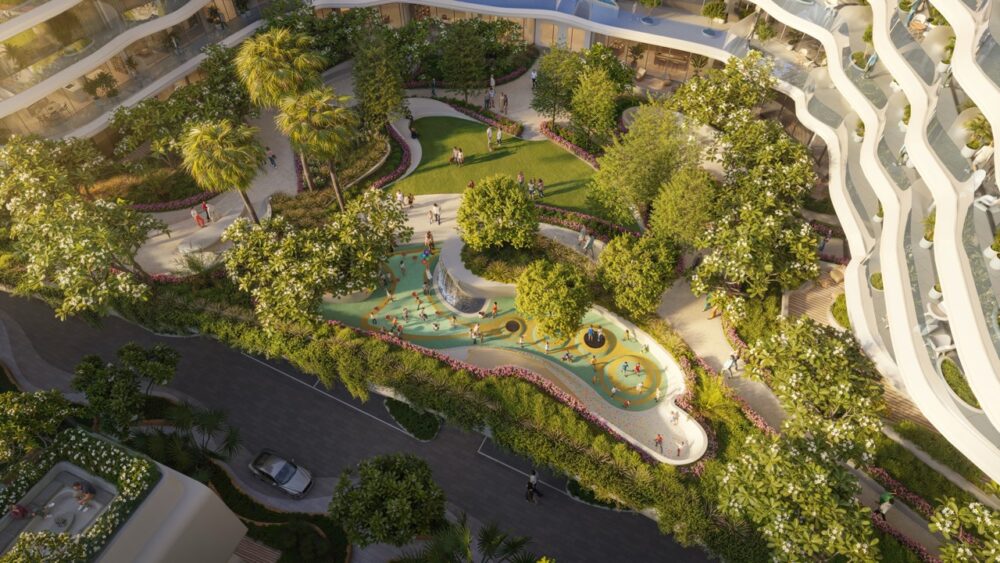
Biophilic design recognizes the human need to connect with nature. In construction, this translates to maximizing natural light, incorporating natural materials like wood and stone, and integrating plant life directly into the architecture.
This isn’t just about adding a few potted plants. We are seeing the rise of “living walls”—vertical gardens that cover exterior or interior surfaces. These walls improve air quality, provide natural insulation, and create a calming aesthetic. Similarly, green roofs—roofs partially or completely covered with vegetation—are becoming common in urban developments. They manage stormwater runoff, reduce the urban heat island effect, and provide crucial habitats for local wildlife.
The Circular Economy in Construction
The traditional construction model has been linear: extract materials, build, and eventually demolish and discard. Eco-friendly construction embraces the circular economy, focusing on minimizing waste and keeping materials in use for as long as possible.
Designing for Deconstruction
Architects are increasingly designing buildings with their eventual end-of-life in mind. “Design for deconstruction” involves using modular components and reversible connections (like bolts instead of glue) so that a building can be easily dismantled rather than demolished. The materials can then be salvaged and reused in new projects, significantly reducing the demand for virgin resources and diverting waste from landfills.
Upcycling and Reclaimed Materials
The use of reclaimed materials is another key aspect of this circular approach. Salvaged wood, recycled steel, and reclaimed bricks not only reduce environmental impact but also add unique character and history to a new building. Even interior finishes are seeing a shift, with carpets made from recycled fishing nets and countertops crafted from crushed recycled glass becoming popular choices.
Comparing Eco-Friendly Construction Innovations
To better understand how these innovations fit into different projects, let’s look at a quick comparison:
| Innovation | Benefit | Trade-off | Best Use Case | Cost Impact |
| Mass Timber (CLT) | Acts as a carbon sink; fast assembly. | Vulnerable to moisture if not treated properly. | Mid-rise commercial and residential buildings. | Moderate initial cost; savings on labor. |
| Passive House Design | Up to 90% reduction in heating/cooling energy. | Requires meticulous construction and detailing. | Residential homes in extreme climates. | Higher upfront cost; low long-term running costs. |
| Living Walls/Green Roofs | Improves air quality; reduces urban heat. | Requires ongoing maintenance and irrigation. | Urban commercial buildings; high-end residential. | Moderate to high installation and upkeep costs. |
| Carbon-Cured Concrete | Traps CO2; increases compressive strength. | Availability is currently limited by region. | Foundations; large-scale infrastructure projects. | Comparable to traditional concrete. |
| Smart Energy Systems | Real-time optimization of energy usage. | Relies on complex software; potential cybersecurity risks. | Large office buildings; modern apartment complexes. | Moderate upfront cost; fast ROI. |
The transition toward eco-friendly construction is accelerating. As regulations tighten and materials become more accessible, sustainable building practices will shift from being innovative to simply being the standard way we build our world.

Terry Clark is the Publisher and Content Director of 365 Retail, with more than a decade of experience covering retail design, technology innovations, store openings and the wider retail industry. He also works closely with leading retailers, suppliers, agencies, events and industry awards across the UK.