







Electronic shelf labelling (ESL) has moved past the introduction phase and is becoming standard in modern retail, with exhibitors at EuroCIS 2027 preparing to show how the technology now extends well beyond digital pricing, into store processes, retail media and even B2B operations.
According to the EHI study “Technology Trends in Retail 2025”, 55% of retail companies surveyed already use electronic shelf labels: 27% across all outlets, 15% at selected outlets and 13% in pilot projects. A separate survey by consultancy Bain and retail technology company Vusion found that 75% of executives at large retail businesses plan a large-scale redesign of their stores within the next two years.

Available in numerous formats, ESL displays have become platforms for store processes in their own right. As well as pricing, they carry campaign content, QR codes and product information at the shelf edge, all centrally controlled, and support staff when filling shelves, picking orders or checking shelf life. Many exhibitors at EuroCIS have announced further developed, integrated ESL systems that open up new revenue options for retailers.
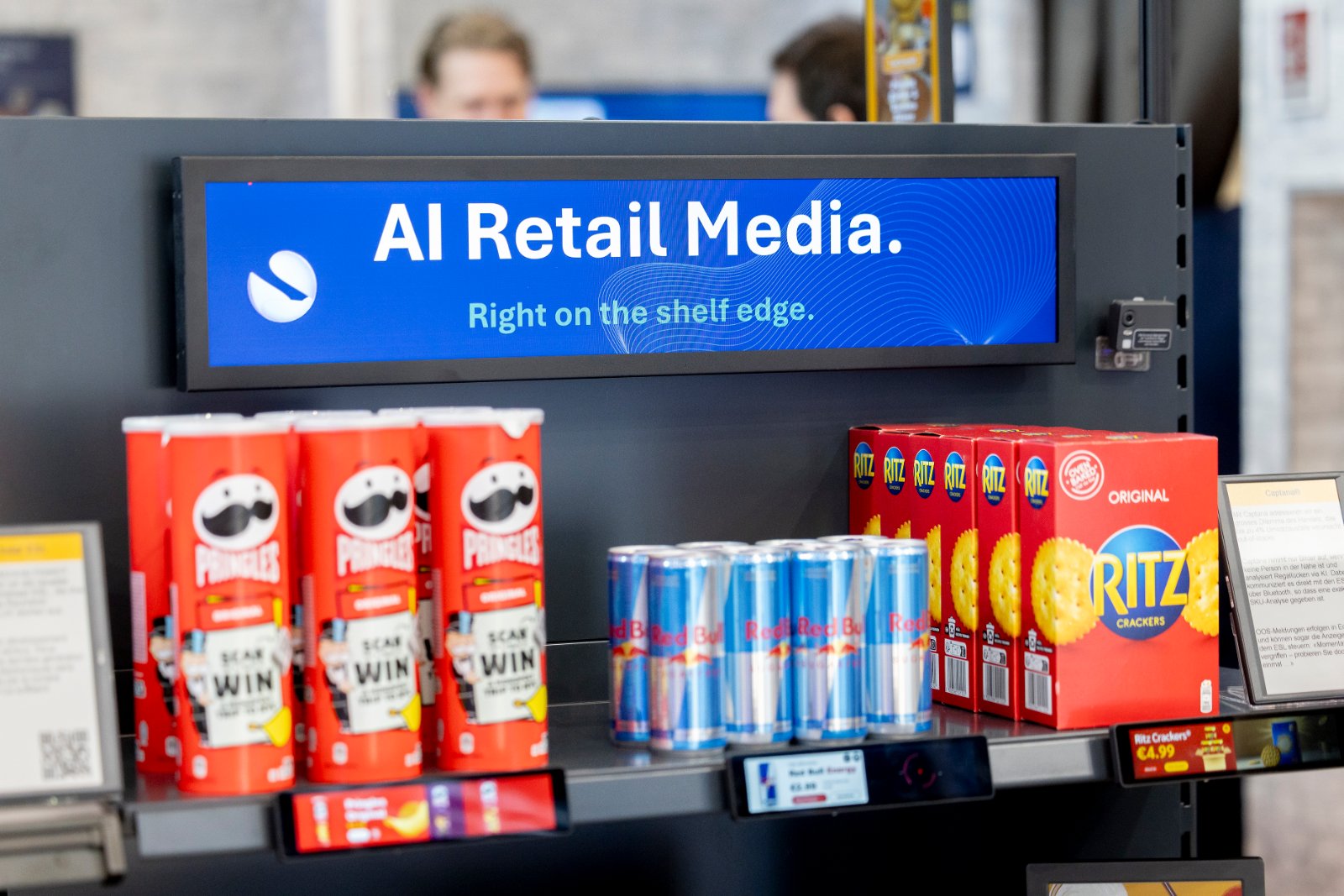
Food retailers and chains with highly dynamic pricing and frequent promotions were the first to adopt ESL, as the investment pays back quickly where price changes and assortment adjustments are frequent. Vusion points to ESL roll-outs at Walmart in the US and dm in Germany, and to Carrefour’s plan to digitalise all of its French hypermarkets and supermarkets by 2030.
“Food retailers have proven the value of connected shelves on a large scale. The next wave will occur in retail sectors where teams have to locate products faster, shoppers expect to find more comprehensive information and prices have to remain consistent across channels.”
Marco Braun, VP DACH, Vusion
Drugstores, pharmacies, cosmetics, furnishing and sports goods retailers, DIY stores and the fashion sector have already started to adopt the technology, with further sectors expected to follow. The benefits include more comprehensive product data, more efficient campaigns, faster inventory tracking and consistent omnichannel pricing. Retailers handling warehousing or picking can also use functions such as Pick-by-Light and digital article identification, while shelf sensors identify out-of-stocks, deviations from the planogram and misplaced products, helping teams prioritise tasks.
The BISON Group also sees growing potential for ESL in B2B.
“ESL opens up new applications especially where extensive product data, QR codes, indication of origin or digital customer interaction are of relevance.”
Nico Wild, Product Manager, BISON Group
BISON has also observed a shift in what users need. In its view, the hardware has largely reached maturity, offering high reliability, long battery life and stable radio technology that works even in demanding buildings, and it is the software and integration with existing systems that increasingly make the difference.
“It is no longer simply about deploying ESL, but how smartly it is used. Today, retailers expect seamless connection with ERP, store and omnichannel systems, the support of store processes, automated price control as well as add-on functionalities such as QR codes, NFC applications or Pick-by-Light.”
Nico Wild, Product Manager, BISON Group
At EuroCIS 2027, BISON will present ESL not as a stand-alone product but as part of a connected retail platform, with the focus on how retailers can simplify and automate processes using a shared data basis.
“Changes from the ERP automatically become visible at the shelf, retail staff is supported by mobile processes and consistent data is available across all systems.”
Nico Wild, Product Manager, BISON Group
In this view, ESL is developing from a digital pricing tool into a platform for processes and shopper interaction, with future value coming from connecting data, processes and employees across the whole store rather than from the hardware itself.
“To us electronic shelf labels are a key component of connected retail solutions in which data, processes and staff cooperate seamlessly.”
Nico Wild, Product Manager, BISON Group
Vusion positions its ESL-based systems as the foundation for what it calls “AI-native stores”. Using Bluetooth Low Energy and real-time shelf data, retailers can track where products are, what is happening on the shelves and where action is needed, optimising picking routes, guiding staff and shoppers to the right products and enabling more responsive customer journeys. Its EdgeSense technology adds real-time shelf monitoring and turns the data into actionable insights and prioritised tasks.
“Our EdgeSense technology allows retail companies to transform their entire spectrum of in-store processes and make workflows more efficient and transparent.”
Marco Braun, VP DACH, Vusion
Vusion’s customers include Fnac-Darty, MediaMarktSaturn, Sephora, Obi, Phoenix’s Benu pharmacies, Jysk and German fashion retailer L&T. In July 2026 the company announced that more than half a billion IoT devices are now connected to its VusionCloud platform.
“This milestone reflects both the speed of implementation and a new phase of technological upgrades since retail companies are keen to get more added value from their connected store infrastructure.”
Marco Braun, VP DACH, Vusion
Vusion plans to demonstrate at the show how electronic shelf labels are developing into a digital platform for a growing range of connected store applications. Retail media is also one of the hot topics of EuroCIS 2027, which has already outlined its six retail technology priorities, with exhibitors showing how retail media offers can be built, controlled and scaled using first-party data, loyalty and CRM systems, personalised campaigns and analytics.
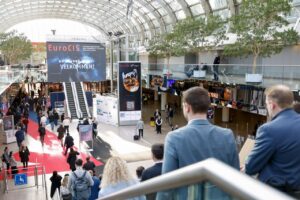
EuroCIS 2027, organised by Messe Düsseldorf, runs from Tuesday 16 February to Thursday 18 February 2027 in Halls 1, 4 and 5 of the Düsseldorf Exhibition Centre. Online tickets cost EUR 30 for one day and EUR 55 for the season, with discounted online tickets at EUR 18 per day.

Terry Clark is the Publisher and Content Director of 365 Retail, with more than a decade of experience covering retail design, technology innovations, store openings and the wider retail industry. He also works closely with leading retailers, suppliers, agencies, events and industry awards across the UK.
Related Posts