







For a business, a new building is rarely just a building. It is a café that needs to open before the summer season, an office that has to be ready before a team grows, or a set of holiday lodges that should be taking bookings as soon as possible. Modular construction suits these situations well. Its main benefits for business are a faster opening, less disruption, more predictable costs, consistent quality and the ability to expand in phases.
Why are more businesses choosing modular construction?
Traditional construction can tie up a site for many months. Weather delays, trades arriving in sequence and changes made on site all push back the date when a building starts earning. For a business, every week of delay has a cost: lost revenue, extra rent elsewhere or a missed season.

Modular construction changes the timeline. Walls, floors and roof panels are made under factory conditions while the site is prepared, so the two stages run in parallel rather than one after the other. The building then arrives ready to assemble, and the time spent on site is much shorter. The result is a more predictable project and often an earlier opening date.
What are the key benefits of modular buildings for business?
A faster route to opening
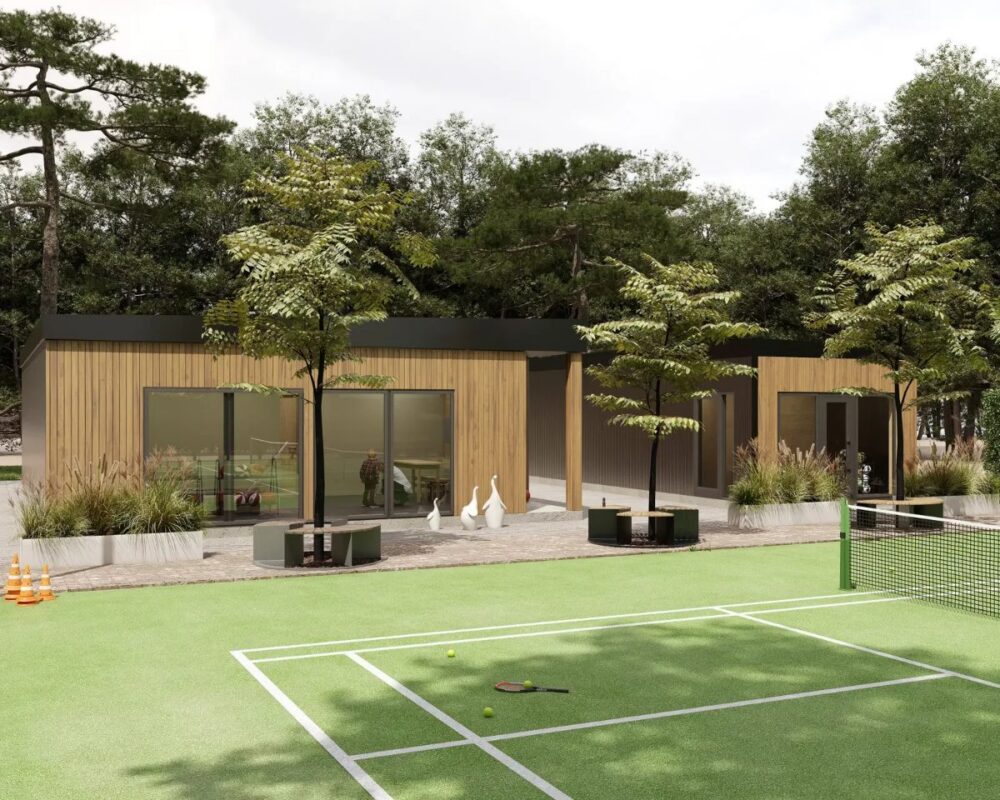
Speed is usually the first reason businesses look at modular buildings. Because manufacturing and groundwork happen at the same time, the overall programme is shorter than with a conventional build. For example, modular buildings by Trident Modular typically take 4 to 6 months from contract to handover, with only 10 to 12 days on site to reach a weathertight stage. Their commercial range shows how varied these buildings can be: from the 14 m² Garden Cafe, which is installed in a single day, to the 51.6 m² Match Point and the 272.3 m² ModWood Cafe.
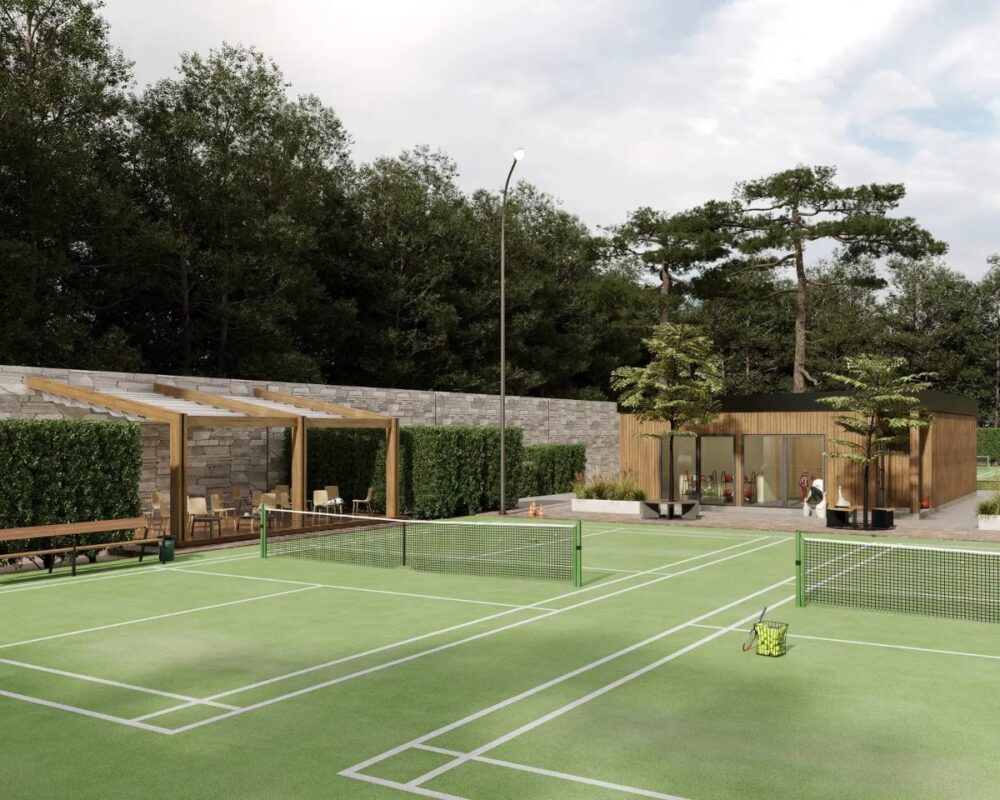
Timing matters as much as speed. Hospitality and glamping businesses can work through design and approvals over the winter, so the building is installed and ready to open in time for spring and summer trade.
Less disruption to existing operations
Many commercial projects take place next to a business that is still trading: a café beside a garden centre, extra classrooms at a school, offices on an industrial estate. With most of the work done off site, there are fewer deliveries, less noise and a shorter period of activity, so customers, staff and neighbours are affected far less.
Greater cost certainty
Because the design and specification are fixed before manufacturing begins, there is less room for unplanned changes on site. Factory production is also far less affected by weather. Together, these make the final cost easier to predict, which helps when a project is funded by a business loan or needs to fit a fixed budget.
Consistent quality
Factory conditions allow each component to be built and checked to the same standard. Insulation, joints and membranes are installed under cover, which reduces the risk of defects caused by rain or rushed work on site. Independent accreditation, such as BOPAS, gives lenders, insurers and investors additional confidence in how a building system will perform over time.
Room to grow in phases
Modular construction is well suited to multi-unit and phased schemes. A glamping site can start with a few lodges and add more as demand grows. A business park can add office units as tenants arrive. Because buildings are produced to a consistent design, later phases match the first, and the site does not need to close for long periods of construction.
Lower running costs
Well-insulated, airtight modular buildings are easier and cheaper to heat and cool. Efficient heating such as air-source heat pumps, along with options like solar panels, can be planned from the start rather than added later. For a business, lower energy use means lower overheads and a stronger sustainability story for customers.
A building that reflects your brand
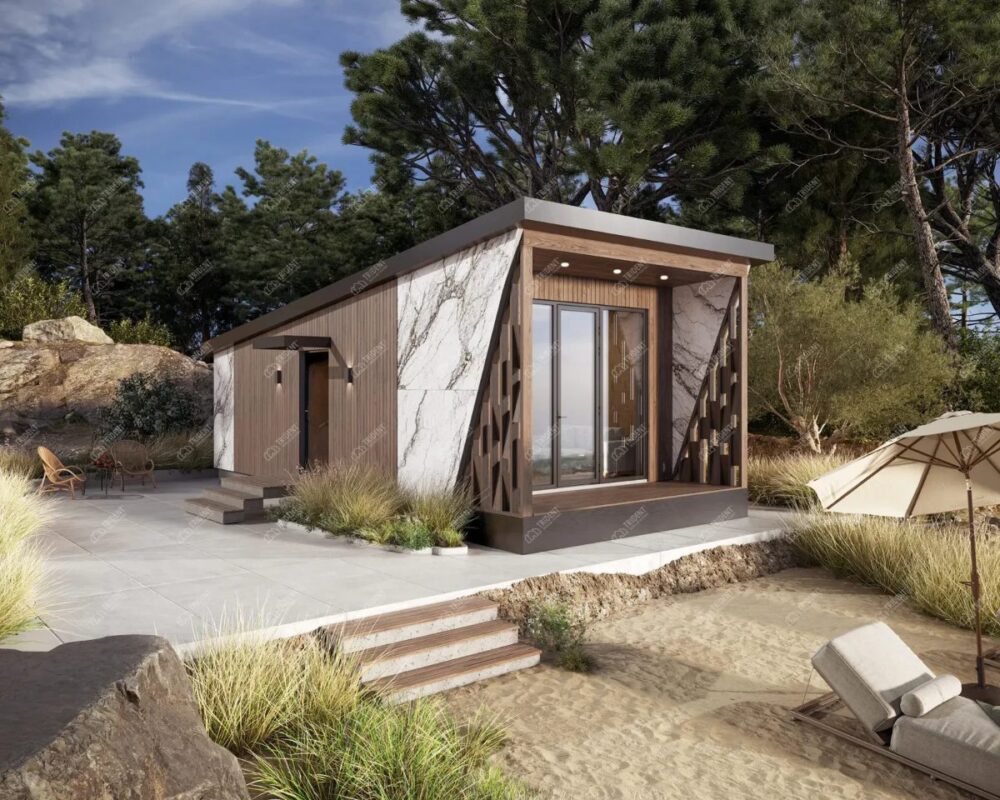
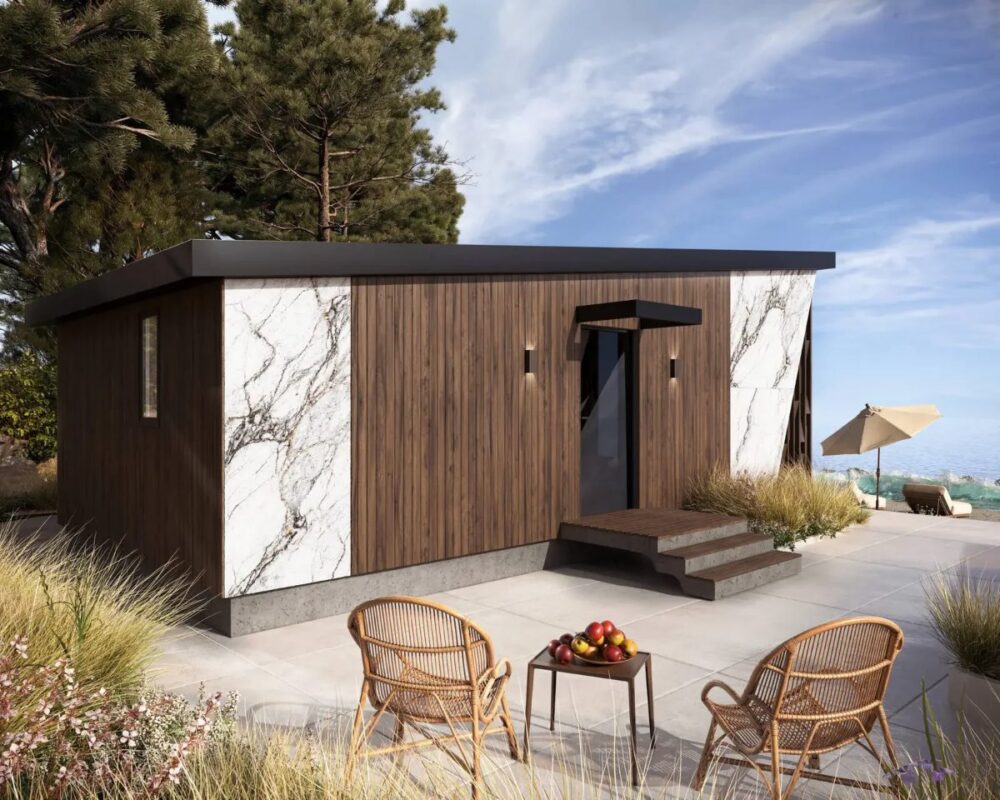
Modular does not mean identical. Cladding, glazing, layouts and interiors can be chosen to suit the business, from a contemporary timber café to a clean, professional office. The building can become part of how customers see the brand.
Accessible from the start
A building that welcomes customers needs to work for everyone. Step-free entrances, accessible toilets, wide doorways and enough space to move around with a wheelchair or pushchair can all be designed into a modular building before it is manufactured, rather than adapted afterwards.
How can you assess the business case?
Comparing a modular and a traditional building on price per square metre alone can be misleading. A more useful comparison looks at the overall effect on the business:
- Time to revenue. How many weeks or months earlier could the building start earning?
- Costs during construction. What would you spend on temporary premises, rent elsewhere or lost trade while a longer build is underway?
- Budget risk. How likely is the final cost to change once work begins?
- Cash flow. Could the project be split into phases, so investment follows demand rather than coming all at once?
- Running costs. How much will the building cost to heat, light and maintain over the years you plan to use it?
Answering these questions with real figures from your own business usually gives a clearer picture than comparing build costs alone.
Which businesses benefit most from modular buildings?
Modular buildings work across many sectors, but some gain particularly clear advantages:
- Cafés and hospitality. A café, kiosk or restaurant extension can be installed quickly at a garden centre, park, sports ground or visitor attraction.
- Glamping and holiday lets. Lodges and cabins can be added in phases, with each unit ready to take bookings soon after installation.
- Offices and workspaces. Growing companies can add space on their own land rather than moving premises.
- Rental units. Landlords and landowners can create accommodation to let, subject to planning, with a predictable programme and budget.
- Education and community buildings. Schools, nurseries and clubs can add classrooms, changing rooms or meeting spaces with minimal disruption during term or season.
What are the limitations?
Modular construction is not the right answer for every project, and it is worth understanding its limits from the start.
Site access. Modules or panels arrive by road and are often lifted into place by crane, so narrow access, overhead cables or tight urban plots can add cost or require a different approach.
Early design decisions. The design must be settled before manufacturing begins. Changes after that point are possible but expensive, so businesses need to be clear about their requirements early.
Approvals still apply. A modular building needs the same planning permission and Building Regulations approval as any other new building. If the project introduces a new use to a site, such as a café on agricultural land, additional consent may be needed, so it is worth speaking to the local council early.
Payment timing. Factory production may require payments earlier in the project than a traditional build, so cash flow and funding should be planned accordingly.
How does a commercial modular project work?
Most projects follow a clear sequence:
- Define the brief. Set out the purpose of the building, the site, the target opening date and the budget.
- Review the site and planning context. Check access, ground conditions, services and any planning constraints before committing to a design.
- Develop the design. Agree the layout, specification and appearance, from concept through to technical drawings.
- Secure approvals. Apply for planning permission and Building Regulations approval in good time.
- Manufacture and prepare the site. The building is produced in the factory while foundations and service connections are completed on site.
- Deliver and install. Modules or panels are delivered and assembled, and the building is made weathertight.
- Fit out and hand over. Interior finishes, equipment and final checks are completed, and the building is ready to open.
Is a modular building right for your business?
A modular building makes the most sense when opening date, budget certainty and minimal disruption matter as much as the building itself. It suits businesses that know what they need, have a site with workable access and may want to expand in stages. Where a project depends on an unusual site or a design that keeps changing, a traditional approach may still fit better. For many businesses, though, modular construction offers a faster, more predictable way to create space that starts earning sooner.

Terry Clark is the Publisher and Content Director of 365 Retail, with more than a decade of experience covering retail design, technology innovations, store openings and the wider retail industry. He also works closely with leading retailers, suppliers, agencies, events and industry awards across the UK.