







Retail operators who insource their logistics for the first time are usually right to do it, as margin control, schedule autonomy, and reduced dependency on third-party carriers are genuine gains when the model is built correctly. The problem is that most insourcing business cases stop at racking, vans, and headcount.
A depot is a capital infrastructure decision with recurring cost lines that rarely appear in the initial proposal and almost always surface in year two, after the headline saving has already been declared. Here are the six costs that most retail operators underestimate and the decision inside each one that determines whether insourcing improves margin or quietly destroys it.

1. The Maintenance Bay Limit
Servicing your own delivery fleet requires a properly equipped maintenance bay. The core capital item determining the scope of that space is the vehicle lift, since its capacity dictates which fleet assets stay internal.
HeavyLift Direct’s heavy-duty Challenger vehicle lifts represent the type of professional-grade equipment suited to mixed-use commercial environments. A bay unable to accommodate your largest box trucks forces immediate partial outsourcing, completely negating the 60-70% projected cost savings associated with performing maintenance in-house.
| Warning/Important: The lift specification decides how much of the fleet can be serviced in-house. Getting it wrong means partial outsourcing and eroded labour savings. |
2. Labour Cover Contingencies
In-house maintenance often starts with a single qualified technician. That individual becomes the entire service capacity of the operation, meaning an unexpected absence halts vehicle throughput entirely.
Vehicles queue up while outsourcing costs reappear at peak emergency rates. Retailers must budget for cross-training and external workshop cover agreements to ensure uninterrupted daily operations.
3. Plant and Oversized Equipment Moves
When a depot takes in large industrial infrastructure, that freight demands specialist permitted haulage. Complex route planning against bridge heights and axle load compliance falls outside standard fleet capabilities.
Navigating these compliance factors is exactly what heavy-haul equipment transport across Texas from Titan Worldwide Logistics handles for oversized loads. Securing the correct trailer configuration, whether using a lowboy or step deck, remains a legal necessity rather than a logistics inconvenience.
Operators moving depot equipment across significant distances need a carrier who manages permitting and routing alongside the physical transit. Budgeting this specialised freight as a line item in the depot setup prevents massive financial surprises after facility contracts are already signed.
4. Power and Compressed Air Sizing
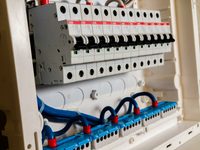
A functional maintenance bay requires electrical supply and compressed air networks sized for actual equipment loads. Machinery like pneumatic tools, tyre changers, and diagnostic systems frequently draw power simultaneously.
The generic building drawing rarely reflects this intense demand accurately. Upgrades arrive as substantial facilities costs after the bay is already operational, requiring new distribution boards and larger compressor circuits.
The critical operational decision involves commissioning a detailed load calculation against the confirmed equipment list before signing off on the bay design. Waiting until the first circuit trips under load guarantees project delays and unexpected invoices. Retrofitting electrical drops consistently costs more than upfront specification, compounding the financial damage by keeping the bay out of service.
5. Parts Stock Capital Management
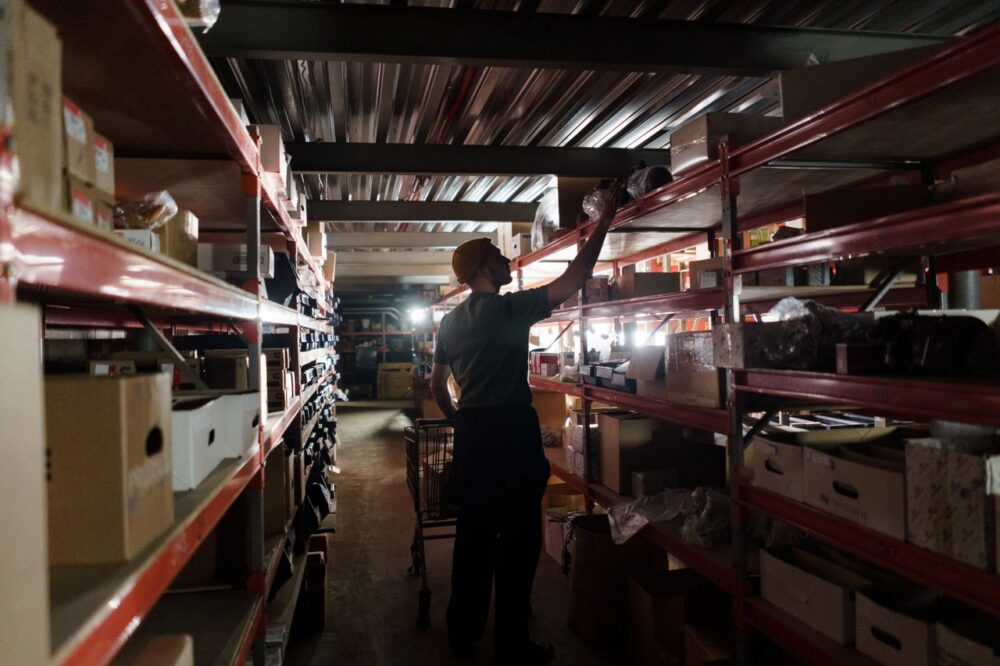
An active in-house bay needs dedicated parts on site to function without persistent mechanical delays. Basic items like filters, engine fluids, belts, and fleet-specific consumables must closely match the active vehicle mix.
Holding that operational stock carries hidden expenses that rarely appear in the initial labour savings calculation, since the overall carrying cost typically runs around 26 per cent. This inventory ties up working capital while consuming physical storage space intended for operational logistics.
Operators also face significant obsolescence risk when fleet specifications evolve, and existing warehouse stock no longer matches the active vehicles. The alternative involves running a lean supply chain against a rapid-delivery agreement with a local trade supplier.
While this reduces the capital tied up on shelving racks, it introduces a dangerous dependency on delivery lead times. Planners typically only model one approach, leaving the other to emerge as an unbudgeted variance.
| Important: Parts stock ties up working capital and storage space, and risk obsolescence. Lean supply agreements introduce dependency on lead times. Both carry costs that often go unmodelled. |
6. The Yard Surface Degradation
Repeated surface movements by articulated vehicles, heavy equipment deliveries, and loaded commercial trucks degrade yard asphalt far faster than standard commercial traffic. A paving surface rated only for basic car park use fails under forty-ton point loading within a much shorter timeframe than most depot build-out models anticipate.
The underlying degradation mechanism remains predictable as repeated pressure fractures the sub-base materials, because road degradation changes exponentially with axle load. For example, a 25,000-pound load causes 244% of the damage compared to standard maximum legal weights, accelerating widespread surface failure.
The recurring maintenance costs that follow include patching sections, extensive crack repair, and drainage system overhauls. Specifying the pavement correctly during the initial build-out costs significantly more upfront but remains much cheaper over the facility’s lifespan. Operators must engineer the surface against the expected vehicle weights rather than relying on a generic commercial paving standard.
The Bottom Line
Taking active control of retail logistics operations remains a profitable move when the margin calculations reflect reality. The underlying hazard stems from cost models that stop counting before addressing the actual infrastructure necessary to support a fleet.
Facility planners must lock down the vehicle lift specifications and labour redundancy strategies long before the first truck requires maintenance. The budget must explicitly account for specialist permitted haulage routing and comprehensive electrical load upgrades.
Retailers that accurately model tied-up capital in parts inventory and engineer their yard surfaces for heavy traffic build depots that perform exactly as projected. Organisations that discover these hidden infrastructure requirements during their second year end up spending their initial margin gains just to keep the facility running.

Terry Clark is the Publisher and Content Director of 365 Retail, with more than a decade of experience covering retail design, technology innovations, store openings and the wider retail industry. He also works closely with leading retailers, suppliers, agencies, events and industry awards across the UK.