











Payment is becoming an integral part of the retail customer journey across every touchpoint, according to EuroCIS, which has made Future Payment one of the Hot Topics for its 2027 edition. The rapid growth of new payment methods is adding complexity for retailers, but it is also opening up new ways to build customer loyalty.
Cash no longer dominates at the check-out. According to the latest survey by the EHI Retail Institute, cash accounted for 78.7% of retail sales in 1994 but just 32.3% in 2025, while the share of turnover paid by card rose from 6.2% to 65.1% over the same period. Girocard, the debit card system operated by the German Banking Industry Committee, leads non-cash payments with a 40.5% share of turnover, but faces growing pressure from Visa and Mastercard debit cards (9.4%). Credit cards follow at 8.2% and SEPA Direct Debit at 6.4%.

Mobile payment gains ground
Almost one in five card payments in retail (19.3%) was made by smartphone in 2025. A study by Stuttgart-based payment provider S-Payment, Consumers’ Payment Behaviour, found that 31% of Germans use mobile payment regularly, 5% of them daily and 14% several times a week.
“Mobile Payment is becoming the new normal.”
Tanja Moll, Head of Payment Sales & Consulting, S-Payment
Mobile payments were boosted in 2018 when the Girocard and the credit cards of the savings bank organisations were integrated into the Apple iPhone Wallet. EHI estimates that Apple Pay is now the most widespread mobile payment method at retail check-outs, followed by Google Pay, while the Sparkassen app for Android smartphones has also become established, alongside Bluecode, Payback Pay, Samsung Pay and Lidl Pay.
The German Banking Industry Committee is also working to develop the Girocard from a mainly offline point-of-sale payment method into a broader digital scheme. From spring 2027, the card is expected to be available inside retailers’ apps, allowing shoppers to activate it without leaving the purchasing process and giving retailers the opportunity to link physical, mobile and digital touchpoints more closely.
Account-to-account payments
Account-to-account payments, in which shoppers pay directly from their own bank accounts into retailers’ accounts, have been discussed for some time as an alternative to cards and wallets. Pay-by-Bank lowers transaction costs for retailers because no card interchange fees or scheme costs are incurred, and payments are mainly made as instant bank transfers.
Bastian Minet, Head of Partner- & Key Account Management at payment provider First Cash Solution, expects account-to-account payments to further grow their market share over the coming years:
“especially where cost efficiency and payment handling speed are key. But we are still far away from replacing established card and Wallet solutions.”
Bastian Minet, Head of Partner- & Key Account Management, First Cash Solution
One example is the payment wallet Wero. Introduced in 2024 as a purely peer-to-peer solution, it is now used as an e-commerce payment method by several hundred retailers, including dm-drogerie markt, Lidl and Decathlon, and retailers are planning the first deployments at check-outs in physical stores this year. Wero is managed by the European Payments Initiative (EPI), an alliance of around 30 European banks and payment service providers headquartered in Brussels.
The digital euro
The European Central Bank has worked with the national central banks for nearly five years to design a digital euro, which it sees as a counterweight to international providers such as Visa, Mastercard and PayPal. The project is in the final stages of the decision-making process: the EU aims to adopt the legislation by the end of 2026, with a pilot planned to start in the third quarter of 2027.
The digital euro will add to the payment options available to shoppers and further increase complexity for retailers. Minet sees the challenge as striking the right balance between choice and complexity.
“What matters for retailers is to optimally cover the payment preferences of their own target group while keeping processes efficient at the same time.”
Bastian Minet, Head of Partner- & Key Account Management, First Cash Solution
Michael Trinks, Head of DACH Region and Country Manager Germany at Verifone, recommends that retailers invest in payment systems that are as flexible and expandable as possible, and says Verifone’s current portfolio, based on the Android operating system, is designed to offer that flexibility.
A wider range of payment systems need not mean more technical complexity at the check-out, according to Rainer Birkner, Sales Lead Retail at payment service provider CCV, who sees a clear trend towards a uniform, flexible payment infrastructure that makes new processes easier to integrate.
“Instead of connecting each new payment method to the check-out systems via separate interfaces, different payment services can be made available through a central technical integration.”
Rainer Birkner, Sales Lead Retail, CCV
More payment touchpoints in store
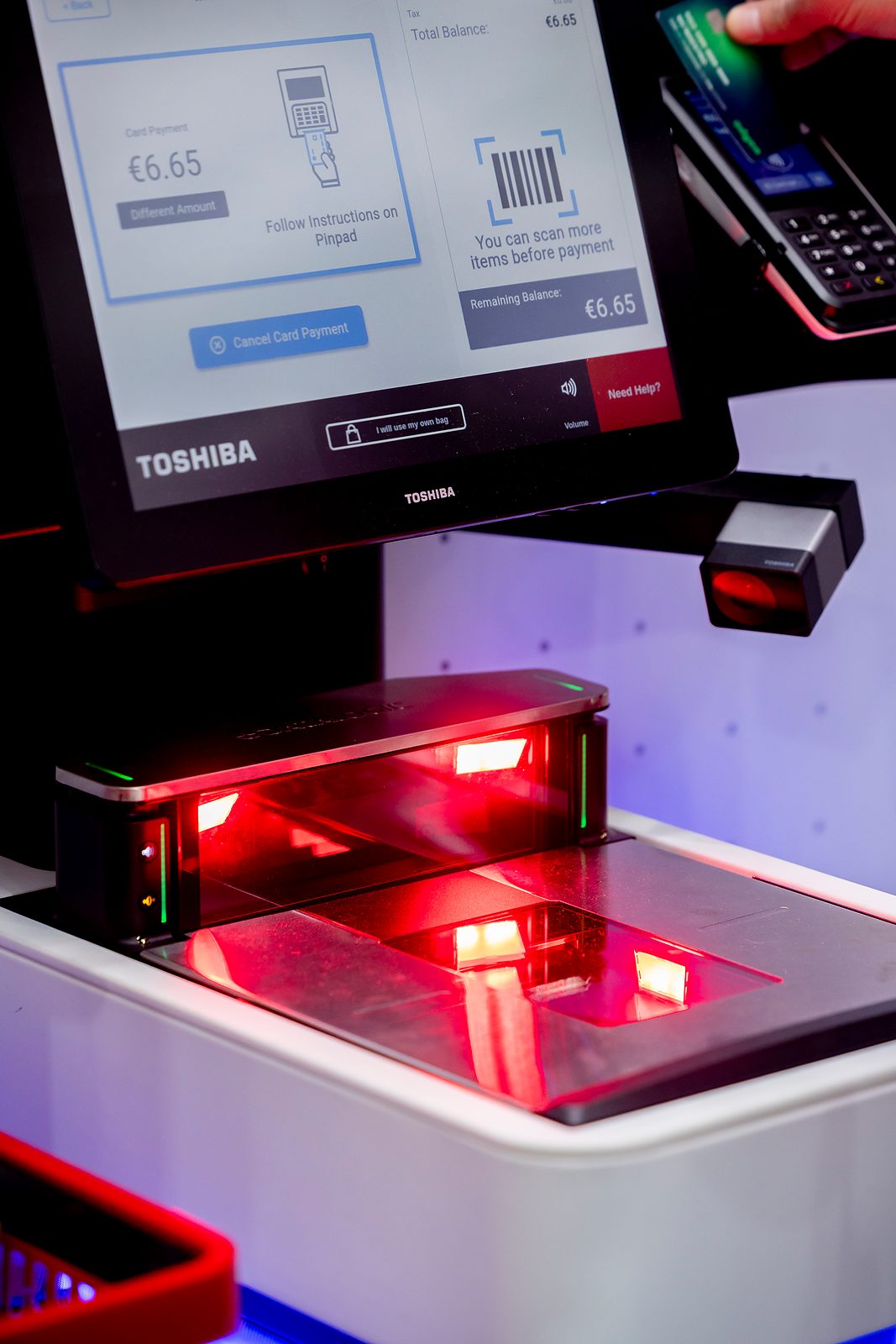
Digital payment is also increasing the number of payment touchpoints in store. Where payment once centred on the traditional check-out, mobile terminals and solutions now allow customers to pay anywhere in the store or directly in an app.
Self-scanning at self-service check-outs, or with hand-held scanners and smartphones, is well established, and EHI estimates that 15,000 to 16,000 stores in Germany alone have self-scanning devices. Smart trolleys fitted with a touchscreen and a hand-held scanner on the handle now let shoppers pay on the trolley itself, recently including contactless payment by card or smartphone.
Self-scanning is also standard in 24/7 smart stores, while grab-and-go stores such as Rewe Pick & Go use AI and computer vision to record every product a shopper picks, allowing customers to leave without a traditional check-out and debiting the amount automatically through an app. With agentic commerce, AI is also moving into online payment: Mastercard and Visa are testing AI agents that handle the whole purchasing process, from research and product selection to payment, on behalf of cardholders.
Future Payment at EuroCIS 2027
Future Payment, one of the retail technology priorities set for EuroCIS 2027, covers the variety and integration of modern payment methods across all touchpoints, with a focus on fast, safe and seamless payment processes that are no longer tied to the physical check-out. International exhibitors at EuroCIS will present solutions for cash technologies, mobile and instant payment and flexible payment infrastructures, alongside new approaches to biometric payment and digital currencies.
EuroCIS 2027 will take place in Halls 1, 4 and 5 of the Düsseldorf Exhibition Centre from 16 to 18 February 2027.

Terry Clark is the Publisher and Content Director of 365 Retail, with more than a decade of experience covering retail design, technology innovations, store openings and the wider retail industry. He also works closely with leading retailers, suppliers, agencies, events and industry awards across the UK.
Related Posts