




The big supermarkets worked something out years ago.
The space inside and around a store is media.

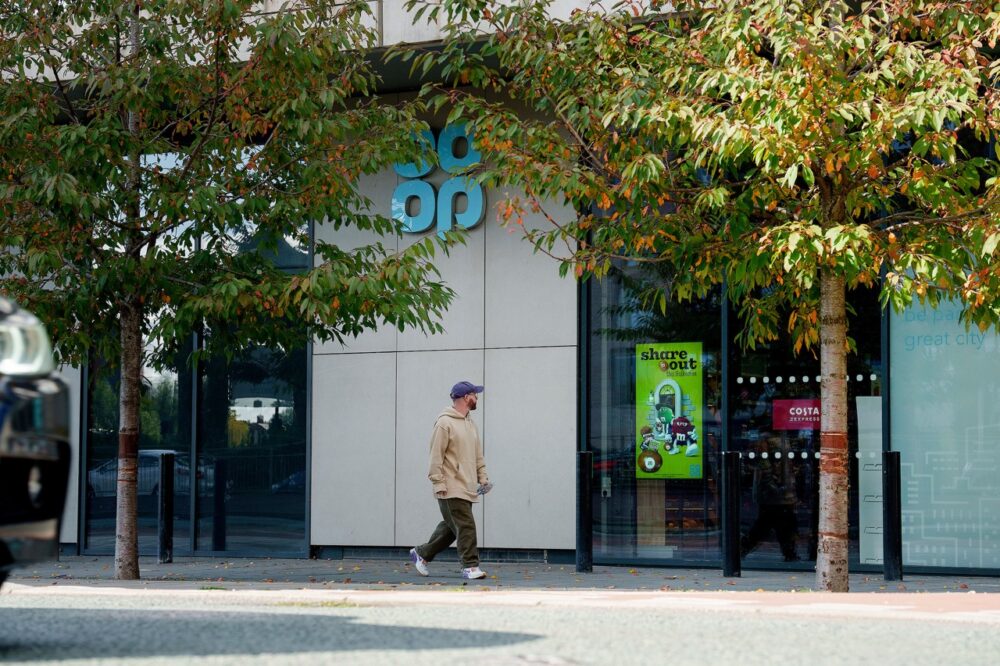
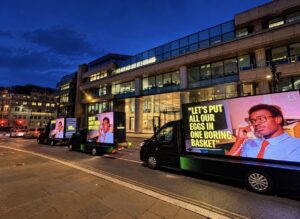
Screens at the checkout. Posters in car parks. Panels on trolleys. Window vinyls facing busy roads. Digital displays reaching customers while they shop.
They packaged that space, put a value on it and built retail media divisions around it. Retail media has become one of the fastest-growing areas of advertising in the UK, largely because retailers realised that their physical locations were not just places to sell products. They were media environments.
But there is a strange gap in the market.
Independent and mid-sized retailers often own exactly the same kind of advertising inventory, yet much of it is still being given away for free, used only for the retailer’s own promotions or left completely empty.
I’ve spent 20 years in advertising, including six in out-of-home, and I now run an agency built around publishing our rates publicly. So pricing is the lens I see everything through.
When I walk into a busy independent retailer and see a supplier’s poster taped up for free, or a window facing a main road with nothing in it, I don’t just see unused space.
I see media inventory.
And potentially, revenue.
Your Footfall Is the Product
Advertisers pay for attention.
A convenience store generating 4,000 transactions a week can deliver repeated, genuinely local attention that is highly valuable to certain advertisers. A hardware store can put a tradesperson’s message directly in front of people already shopping for tools and materials. A retailer near a busy A-road can have a car park panel seen by passing traffic as well as customers.
That is what makes retail media interesting.
The audience is already there.
The retailer has already done the hard work of creating the location, attracting the customers and generating the footfall. The advertising opportunity sits on top of that existing audience.
A car park panel at a busy retail location can sometimes be more useful to a local advertiser than a traditional roadside billboard because the audience has already slowed down, stopped and entered the environment.
The supermarkets understood that footfall is an asset with a price.
Smaller retailers often treat it as a by-product of trading.
It isn’t.
It is inventory.
What Is Your Advertising Space Actually Worth?
There is no universal rate card for retail media.
The value of a window, poster, digital screen or car park panel depends on the location, audience, visibility, dwell time, frequency and relevance to the advertiser.
But there is a sensible starting point.
Look at comparable out-of-home advertising rates first, then adjust for the audience and environment your own space provides.
For example, a standard regional 48-sheet billboard can be bought for around £325 for a two-week campaign at the market rates referenced in this article. A six-sheet bus stop site can cost less.
Those figures provide a useful benchmark because they show what an advertiser might already be prepared to pay for street-level attention in the same geographic area.
Your retail environment can then add its own value.
Dwell time may be longer. Your audience may be directly observable through footfall and transaction data rather than being entirely modelled. The context can also be much stronger.
A local tradesperson advertising inside a hardware shop, for example, is reaching potential customers at exactly the point when their product or service is relevant.
Those factors can justify a premium on the value of the audience, even if the overall weekly price is lower than a major roadside site because the retailer has a smaller total audience.
As a rough starting point, an independent retailer with more than 3,000 weekly visitors could potentially look at around £30 to £60 a week for a well-positioned A1 window or in-store poster site.
Digital screen inventory can command more.
A visible car park panel facing a busy road can command considerably more.
The important point is not whether £30, £60 or £100 is the correct number.
The important point is that the space has a value.
If a supplier or local business is currently getting that space for free, the retailer is effectively subsidising somebody else’s marketing.
Three Things to Do Before Selling Your First Advertising Site
1. Count Your Audience Before You Quote
Start with the numbers.
Record weekly footfall, transactions and, where possible, passing traffic.
Advertisers buy evidence, not vibes.
Even a simple one-page audience profile can completely change the conversation. Instead of saying, “We have a busy shop”, you can say how many people visit, how often they visit and what makes the location commercially valuable.
That starts to turn a retail business into a media owner.
2. Publish Your Advertising Rates
This is where many smaller retailers can learn from the wider out-of-home advertising market.
If your rates are completely hidden, every conversation becomes a negotiation.
A simple retail media rate card makes the proposition easier to understand and positions the retailer as a professional media owner rather than a shopkeeper doing an occasional favour for a supplier.
Transparency also gives advertisers something they increasingly expect: a clear understanding of what their budget actually buys.
That is something I have written about extensively in my OOH advertising insights section, particularly as more advertisers look for clearer pricing and better information before committing budget.
3. Protect the Shopping Experience
Not every piece of available space needs to be sold.
Limit the number of advertisers. Set creative standards. Protect key customer touchpoints. Make sure third-party advertising does not compete with your own offers at the point of purchase.
The supermarkets do this deliberately.
Scarcity is part of the value.
If every wall, screen and window is covered in advertising, the individual messages become less valuable. A controlled retail media environment can therefore be worth more than simply maximising the number of adverts.
Retail Media Is Moving Beyond the Supermarkets
Retail media budgets are growing, but advertisers are also looking for alternatives to the handful of enormous networks that dominate the market.
That creates an opportunity for independent retailers.
A local retailer can offer something a national retail media network cannot always replicate: genuinely local attention, a specific geographic audience and an environment where the advertiser can be highly relevant to the customer.
For local businesses, that can be particularly powerful.
A tradesperson, estate agent, restaurant, gym, car dealer or professional service provider may care far more about reaching 3,000 relevant local people repeatedly than reaching a much larger but less targeted audience.
The opportunity is therefore not simply to sell a poster on a wall.
It is to package the audience around the space.
That is the difference between selling advertising space and operating a retail media proposition.
The Window Is Open, Briefly
Retailers already have much of what advertisers need.
They have locations. They have footfall. They have customer environments. They have windows, screens, car parks, walls and other physical touchpoints.
What many do not yet have is a proper commercial model for turning those assets into advertising inventory.
That will change.
Aggregators will eventually arrive, package independent retail inventory, take a margin and potentially have a significant influence over pricing.
Retailers that establish their own rates, collect their own audience data and understand the value of their locations now have an opportunity to keep more of that value themselves.
The store already generates the audience.
The question is whether you remain the retailer who happens to have advertising space, or become the media owner who knows what that space is worth.
For more practical thinking on out-of-home advertising, media pricing and how advertising inventory is valued, explore the billboard advertising insights from Loud OOH.

Jamie Roberts, Founder of Loud! OOH
Jamie Roberts is the founder of Loud! OOH, an independent UK out-of-home advertisingagency with zero markups and openly published pricing across billboards, digital, bus andtransport formats.
Related Posts